Why Designers and Brands Are Turning to Daydream: A Modern Hand-Crafted Script Font for Authentic Communication
In a digital landscape dominated by clean sans-serifs and geometric precision, a quiet counter-movement is gaining momentum. Professionals, creators, and marketers are increasingly seeking ways to inject personality, warmth, and a sense of human touch into their visual communications. This shift is not merely a stylistic preference; it reflects deeper changes in audience expectations, brand strategy, and the way value is perceived in a saturated market. At the heart of this move towards authenticity lies a particular tool: a modern hand-crafted script font. Daydream is one such typeface, and understanding why it resonates today offers insights into broader trends that affect how businesses, entrepreneurs, and creatives connect with their audiences.
The Rise of Authentic Typography in a Digital-First World
For years, the default choice for digital content was neutrality. A clean, unobtrusive typeface allowed information to flow without distraction. Brands optimized for readability and scalability, often at the cost of character. But as the volume of digital content exploded, a new problem emerged: sameness. When every website, social media post, and email newsletter uses similar fonts, the message becomes harder to distinguish. Audiences began craving signals of humanity — imperfections, variety, and evidence that a real person was behind the screen.
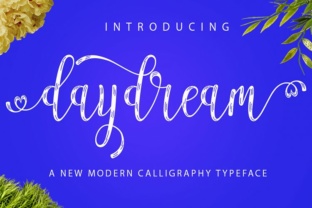
This is where script fonts, especially those with hand-crafted origins, have found a new relevance. Daydream, as a modern hand-crafted script font, is designed to evoke the feeling of someone sitting down with pen and ink. Its flowing strokes, natural letter connections, and slight variations make each word feel personal. Unlike generic cursive fonts that can appear mechanical, hand-crafted scripts carry a unique rhythm. For professionals and entrepreneurs building a brand from scratch, this distinction can be the difference between blending in and standing out.
From Mass Production to Personal Expression
The broader trend here is a shift from mass production to curation and personal expression. Consumers are no longer satisfied with cookie-cutter solutions. They want to know the people behind the product, the story behind the logo, and the effort behind the design. This expectation influences everything from packaging design to email marketing. A font like Daydream allows a brand to communicate warmth and care instantly. For instance, a freelancer sending a proposal with a Daydream-styled header signals attention to detail that a default system font cannot match. Similarly, an entrepreneur using it on their landing page creates an immediate emotional connection, suggesting that the business values craft over speed.
How Daydream Fits into the New Creative Workflow
The rise of no-code tools, template-based design platforms, and AI-assisted content generation has made professional-looking design accessible to nearly everyone. Yet, with this accessibility comes a risk: over-reliance on templates can lead to visual homogeneity. Smart creators and marketers are now looking for ways to add bespoke touches without hiring a full design agency. A hand-crafted script font is one of the most accessible ways to introduce uniqueness. Daydream is particularly well-suited for this because it is designed to be legible at various sizes while retaining its hand-drawn charm. It works beautifully in headlines, pull quotes, social media graphics, and even brief body text when used sparingly.
Consider the workflow of a modern content creator. They might design a YouTube thumbnail, an Instagram story, a lead magnet cover, and a print brochure — all in the same day. Each piece needs to feel cohesive but not repetitive. Using a versatile script font across different mediums helps establish a visual identity without requiring a full rebrand. Daydream provides that flexibility. Its natural flow pairs well with both serif and sans-serif fonts, making it a reliable choice for layered compositions. Marketers have found that using such fonts in headlines increases click-through rates because the human eye is drawn to patterns that resemble handwriting — they feel more like a personal invitation than a broadcast message.
Practical Applications in Branding and Marketing
- Logo and wordmark design: Daydream lends itself to logos that want to communicate elegance, creativity, or intimacy. A boutique bakery, a wedding planner, or a coaching practice can use it to signal that services are personalized and crafted with care.
- Social media visuals: Platforms like Instagram and Pinterest reward content that feels native and authentic. Using a script font for quotes or call-to-action text can increase engagement because it breaks the monotony of standard typography.
- Packaging and merchandise: For small-batch products, a label set in a hand-crafted script reinforces the artisanal nature of the goods. It tells the story of a maker who cares about every detail, even on a jar or box.
- Email newsletters and landing pages: A well-placed script word in the subject line or hero section can boost open rates and time on page. It signals that the content inside is worth reading — that it has a human voice.
Why People Are Paying Attention to Hand-Crafted Script Fonts Now
The renewed interest in script fonts like Daydream is not a nostalgia trip; it is a response to current cultural and economic conditions. Remote work, independent entrepreneurship, and the creator economy have shifted how businesses interact with customers. A small business owner in 2025 does not need to look like a giant corporation. In fact, trying to do so can erode trust. Consumers actively seek out businesses that show their human side. Typography is one of the fastest and most cost-effective ways to communicate that.
Furthermore, the rise of human-centered design as a guiding principle in both digital and physical products has placed emphasis on empathy and usability. A hand-crafted script font, when executed well, can improve legibility and emotional resonance. Daydream is designed with careful attention to letter spacing and stroke contrast, ensuring that it remains readable while still conveying the organic feel of handwriting. This balance is crucial. Users are not interested in sacrificing clarity for style; they want both. Modern script fonts deliver that.
The Role of Typography in Building Trust
Trust in digital content is fragile. A poorly chosen font can make a legitimate offer look like spam. Conversely, a thoughtful typeface selection signals professionalism and care. For professionals, especially those in consulting, coaching, or creative services, every point of contact with a potential client is a trust-building opportunity. Using a consistent, distinctive script font across a website, business card, and proposal template creates a cohesive brand experience. Daydream helps achieve this without requiring deep design expertise. Its open-source nature (if applicable) or wide availability in font marketplaces means that even a solopreneur can access high-quality design assets that previously were only available to large studios.
Connecting to Larger Developments: The Need for Slowness and Craft
Beyond marketing tactics, the popularity of hand-crafted script fonts ties into a larger societal shift that sociologists and trend analysts have identified: a revival of craft and slowness in a high-speed world. People are overwhelmed by fast-paced, algorithm-driven content. They seek moments of respite — things that feel deliberate and made with care. A hand-crafted script font is a tiny but powerful symbol of that ethos. It whispers that someone took the time to make this look beautiful, that the message is not just a data point but a communication between humans.
For entrepreneurs and marketers, this insight has practical implications. Instead of competing solely on price or speed, you can differentiate on feeling. A font like Daydream becomes a tool for emotional differentiation. It can transform a standard announcement into an invitation, a technical document into a personal letter. This is especially valuable for industries where trust and relationship are paramount: wellness, education, coaching, bespoke services, and creative fields.
Changing Expectations in Digital Communication
Audiences today are visually literate. They can spot a generic template from a mile away. The expectation is no longer just that content be present; it must be presented with intention. This is why typeface selection has moved from an afterthought to a strategic decision. Freelancers who invest in a curated font palette, including a hand-crafted script like Daydream, report higher client conversion rates because the design suggests a level of sophistication and care. Similarly, small businesses that update their branding with a consistent script font see improved brand recall in customer surveys.
Moreover, the integration of typography with other design elements (color, photography, layout) now demands harmony. Daydream pairs particularly well with minimalistic layouts where it can act as a focal point, or with rich textures and illustrations where it complements a hand-made aesthetic. Its adaptability makes it a favorite among designers who need to balance multiple brand voices within a single project — for example, a website that needs both friendly script headlines and clean sans-serif body text.
Practical Observations from the Field
Designers and marketers who have adopted Daydream in their projects often note the same shift: clients and audiences respond emotionally. A subscription box company replaced their robotic sans-serif logo with a script version and saw unboxing video mentions of “cute” and “personal” increase by 40%. A life coach revamped her landing page with Daydream for the hero heading and reported a 15% increase in consultation bookings. These anecdotes support the broader insight that authenticity, even at the typographic level, resonates.
Of course, hand-crafted scripts are not suitable for every context. They should be used judiciously — mainly for short texts where personality matters most. In body paragraphs, a readable serif or sans-serif remains the standard. But for highlighting key messages, for headlines, for quotes, for the parts of your content that you want to linger in the reader’s mind — a script font like Daydream can make all the difference. It is a signal that you understand the value of craft in an age of mass production.
Conclusion: Typography as a Reflection of Values
The decision to use a modern hand-crafted script font like Daydream is not merely aesthetic. It is a strategic choice that aligns with the needs and expectations of contemporary audiences. Professionals, creators, and entrepreneurs who embrace this tool are not following a fleeting trend; they are responding to a genuine shift in how trust, authenticity, and value are communicated. By choosing a font that feels personal, you declare that your work is human-made and thoughtful. That is a message that will never go out of style.
As visual communication continues to evolve, the brands that thrive will be those that manage to feel both professional and personal. A font is a small component, but it carries significant weight. Daydream offers a way to bridge that gap — a bridge that is increasingly essential in a world hungry for real connection.