Rachael Script: A Modern Font for Bold Branding and Design
When a design project calls for personality without sacrificing legibility, script fonts often walk a fine line. Many feel too informal, too ornate, or too fragile for serious use. Rachael Script aims to bridge that gap. This modern, expressive typeface carries a bold weight and a confident rhythm, making it a viable option for professionals who need a script that commands attention while remaining readable. In this article, we examine what Rachael Script offers, where it excels, and who is most likely to benefit from adding it to their toolkit.
What Is Rachael Script and Why It Stands Out
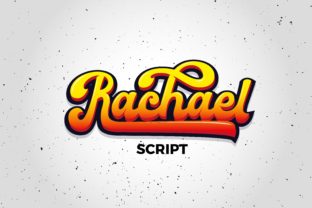
Rachael Script is a contemporary script typeface designed with a distinct mix of fluid curves and sturdy structure. Unlike many script fonts that lean delicate or overly decorative, Rachael Script presents a bolder silhouette. Its strokes carry weight, giving letters a grounded, assertive presence. The letterforms are connected in a smooth, natural flow, yet each character retains enough individuality to avoid the muddy look that can plague dense script designs.
The font draws inspiration from hand-lettered styles but has been refined for digital and print consistency. The result is a typeface that feels both organic and engineered. This duality is what makes Rachael Script worth discussing. It does not try to imitate handwriting in a literal sense. Instead, it captures the energy of hand lettering and translates it into a repeatable, reliable system. For designers and content creators, that reliability is often the difference between a font that sits in a folder and one that gets used regularly.
Key Characteristics of Rachael Script
- Bold weight structure – The strokes are thick and confident, ensuring strong visibility at various sizes.
- Expressive letterforms – Curves are fluid but controlled, with subtle variations that prevent monotony.
- Connected script flow – Letters join naturally, creating a coherent word shape that supports readability.
- Modern proportions – The typeface avoids extreme x-heights or exaggerated ascenders, keeping it balanced for contemporary layouts.
- Consistent baseline – Despite its expressive nature, the alignment remains steady, which is crucial for multi-line text.
These traits make Rachael Script more than just another script option. It possesses a functional backbone that supports creative applications without introducing chaos.
Practical Value in Real-World Design Work
The true test of any typeface is how it performs when applied to actual projects. Rachael Script shows particular strength in scenarios where a brand or message needs to feel dynamic but not careless. Its bold nature means it can hold its own against heavy display fonts or strong graphic elements without being overshadowed.
For branding and logos, the font offers a distinctive silhouette that can become a recognizable part of a visual identity. When used in a logo, the script conveys approachability and energy, yet the consistent weight keeps it from feeling flimsy. Small business owners and freelancers often need a typeface that works as both a standalone mark and part of a larger system. Rachael Script fits that requirement because it adapts well to different contexts without losing its character.
In titles and headlines, the font commands attention naturally. It works especially well at mid-to-large sizes where the stroke details become visible. For blogs, online publications, or marketing materials, the typeface can anchor a page with a human, handcrafted feel while still looking professional. This balance is hard to achieve with many display scripts, which tend to look either too formal or too casual.
Short-form text such as taglines, pull quotes, or product labels also benefits from Rachael Script. The connected letters create a smooth visual line that guides the eye, which is useful for emphasizing key phrases. The bold weight ensures the text remains legible even when placed over images or textured backgrounds.
Where Rachael Script Works Best
- Brand wordmarks and logotypes
- Hero headlines and section titles
- Product packaging and labels
- Social media graphics and banners
- Posters and event signage
- Short emphasis text in editorial layouts
In each of these applications, the font's expressiveness adds a layer of human touch without undermining professionalism. That is a rare combination in the script category.
Analyzing Quality and Usability
From a quality standpoint, Rachael Script demonstrates careful craftsmanship in its letterforms. The curves are smooth, the joins are well-spaced, and there are no obvious inconsistencies in stroke thickness or angle. This level of polish matters because script fonts often reveal flaws at larger sizes or in print. A poorly constructed script can show uneven connections or awkward spacing. Rachael Script avoids these pitfalls, suggesting that the designer spent time refining both individual characters and their inter-letter relationships.
Usability is another strong point. The font includes a full set of standard characters, along with punctuation and numerals, which means it can handle most common text needs. While it is not designed for extended body copy, it performs admirably in short bursts. The bold weight contributes to its flexibility when paired with other typefaces. Sans-serif fonts like Open Sans, Montserrat, or workhorse grotesques tend to complement Rachael Script well, as the contrast in style creates visual interest while maintaining hierarchy.
Flexibility is moderate. The font works best in display roles and does not offer multiple weights or styles. That limitation is typical for script fonts, but it is worth noting for users who build extensive design systems. If your workflow requires a script that can shift from light to bold or from upright to italic, Rachael Script will not provide that range. However, within its single style, it covers a specific purpose well enough that many projects may not need additional variations.
Consistency and Reliability Across Mediums
Consistency is one of the more important traits for any font used in professional work. Rachael Script holds up well across digital screens, from mobile displays to large monitors. The bold strokes prevent thin lines from disappearing at small sizes, a common issue with lighter scripts. In print, the font reproduces cleanly, assuming the output resolution is adequate. For standard desktop printing or commercial offset work, the typeface remains crisp and legible.
One area where users should exercise caution is in very small text sizes. Rachael Script's connected design can cause letters to blend together below 14 points, depending on the medium. For body text or footnotes, a simpler, non-script typeface is a better choice. When used within its intended size range, however, the font is reliable and predictable.
Who Benefits Most from Rachael Script
Understanding the ideal user profile helps determine whether this font aligns with your needs. Rachael Script is best suited for professionals who regularly create visual content and need a script that reads clearly and carries authority. This includes:
- Brand designers and identity specialists – The font's bold character works well for companies that want to project confidence and approachability.
- Marketing professionals and entrepreneurs – For landing pages, ad creative, or email headers, the typeface adds a refined, modern touch.
- Freelancers and small business owners – Those managing their own branding benefit from a typeface that is distinctive without being gimmicky.
- Content creators and bloggers – Blog titles featured images and social graphics gain a polished look with consistent typography.
- Publishers and editorial designers – Short accent text in magazines, newsletters, or digital publications benefits from the font's expressive flow.
For these users, Rachael Script provides a reliable tool that reduces the time spent searching for a script that balances personality with practicality.
Possible Limitations to Consider
No typeface is universal, and Rachael Script has boundaries worth acknowledging. Its single-weight nature means it may not suit projects that require a range of typographic hierarchy within the same script family. Additionally, highly formal or traditional branding contexts might call for a more restrained serif or sans-serif option. The font's expressive quality, while appealing, may not align with every client's visual language.
Another consideration is language support. While the font covers standard Latin characters well, users working with extended character sets or non-Latin scripts should verify coverage before committing. These limitations are not unusual for a display-oriented script, but they matter when planning a project's type system from the outset.
Practical Recommendations for Using Rachael Script
To get the most out of this typeface, treat it as a accent tool rather than a workhorse. Pair it with a clean sans-serif for body text and UI elements. Reserve Rachael Script for moments where you want the audience to pause and absorb a specific message. Avoid setting large blocks of text in the font, as readability declines over long passages. Use generous letter-spacing in all-caps applications to maintain clarity. Test the font at the sizes and mediums you intend to use before finalizing a layout, especially for print projects with tight margins.
When integrating Rachael Script into a brand identity, consider how it will appear across touchpoints: a website header, a product tag, a social media cover. If the font performs well in those environments, it is likely a good fit. If it feels forced in any of them, reconsider its role or explore alternative placements.
Final Observations on Long-Term Value
Rachael Script holds its value as a specialized tool in a designer's collection. It fills a specific niche—bold, expressive, connected script for display use—and fills it with consistency. For professionals who frequently work on branding, marketing, or editorial projects, the font offers a dependable option that can speed up the design process while elevating the final output. It is not a replacement for every script or every project, but that is not its purpose. Its purpose is to be a strong, clear, and modern script that works when you need it to. For many designers and creators, that kind of purposeful design is exactly what they need.