Perfume Font: A Handwritten Masterpiece with Elegant Swashes for Modern Design
Typography has a way of shaping how people perceive a project before they even read a single word. A font like Perfume does something rare—it brings the warmth and personality of human handwriting into digital design while maintaining a level of polish that feels deliberate and refined. Whether you are designing wedding invitations, branding materials, social media graphics, or product packaging, the right handwriting font can transform a layout from ordinary to memorable. Perfume offers exactly that kind of transformative power, especially with its two distinct versions and the inclusion of italic alternates that add motion and grace to any text.
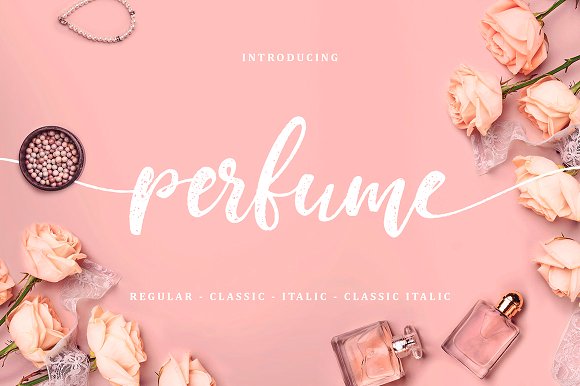
What makes Perfume stand out in a crowded field of script fonts is not just its elegant letterforms but the thoughtful inclusion of long, flowing swashes that extend from characters in a way that feels natural rather than forced. These swashes are not an afterthought—they are integral to the font's personality, giving every word a handcrafted quality that digital design sometimes lacks. Designers who value authenticity and a personal touch will find that Perfume delivers both without sacrificing legibility or versatility.
Understanding the Two Versions: Regular and Classic
Perfume comes in two primary versions: Regular and Classic. While both share the same underlying handwriting DNA, they offer distinct moods that serve different design needs. The Regular version leans toward a more contemporary, approachable style. Its strokes feel fluid and unforced, making it an excellent choice for projects where you want the text to feel intimate and personal—like a handwritten note from a friend. The letter spacing is balanced, and the swashes, while still prominent, are integrated in a way that supports readability rather than overwhelming it.
The Classic version, on the other hand, carries a sense of tradition and formality. The letterforms are slightly more structured, with a refined curvature that evokes vintage calligraphy and formal correspondence. This version is ideal for projects that require a timeless elegance—think luxury brand logos, high-end stationery, or certificates. The swashes in Classic feel more pronounced and deliberate, adding a layer of sophistication that pairs well with serif or sans-serif typefaces in a layout hierarchy.
Both versions also come with dedicated italic variations. The italic styles are not simply slanted versions of the upright forms—they have been carefully redesigned to preserve the fluidity of handwriting while adding a gentle forward tilt that mimics natural penmanship. This means you can use italics for emphasis, pull quotes, or subheadings without breaking the visual harmony of your design. Having both upright and italic options within each version gives you significantly more flexibility when building typographic systems for projects that require multiple levels of text.
The Role of Long Swashes in Adding Elegance
One of the most distinctive features of Perfume is the inclusion of long swashes that extend from key characters. These swashes are not uniform—they vary in length, angle, and curvature depending on the letter and its position within a word. This variation is what makes the font feel organic rather than mechanical. When you type a word, the swashes interact with adjacent letters in a way that mimics the natural flow of ink on paper.
For designers, this opens up creative possibilities that go beyond standard typography. You can use swashes to create decorative flourishes at the beginning or end of a headline, to underline a word in a visually interesting way, or to add a sense of movement to a logo. Because the swashes are built into the font itself, you do not need to manually draw or position them—they appear automatically as you type, saving significant time while still delivering a bespoke look.
However, it is worth noting that the length of the swashes means you need to be mindful of spacing. In tight layouts, the swashes from one line of text might overlap with another line or with other design elements. This is not a flaw—it is simply a characteristic that requires thoughtful placement. Designers who embrace this will find that the swashes add a layer of depth and texture that flat, uniform fonts cannot replicate. For social media graphics, quotes, and titles, this feature alone makes Perfume a standout choice.
Practical Applications Across Industries and Projects
Perfume is not a one-trick font. Its versatility comes from the combination of two distinct styles and the availability of italic versions, which means it adapts to a wide range of contexts. In the wedding and events industry, for instance, the Classic version paired with its italic variant works beautifully for save-the-date cards, invitation suites, and thank-you notes. The swashes add a romantic, handcrafted feel that aligns with the emotional tone of such occasions. The Regular version, meanwhile, can be used for less formal event signage or welcome boards where a friendly, approachable tone is more appropriate.
In branding and logo design, Perfume offers a way to inject personality into a visual identity without relying on complex graphics. A single word set in the Classic Italic version, with its flowing swashes, can serve as a memorable logotype for a boutique, a beauty brand, or a creative studio. The font pairs especially well with minimalist layouts, where the typography becomes the focal point rather than competing with other visual elements. Designers often combine Perfume with clean sans-serif fonts for body text, creating a contrast that highlights the elegance of the script without sacrificing overall readability.
Social media content is another area where Perfume shines. Platforms like Instagram, Pinterest, and TikTok rely heavily on visual appeal, and typography plays a crucial role in stopping the scroll. A quote set in Perfume Regular Italic, with its natural flow and decorative swashes, can evoke emotion and engagement in a way that standard fonts cannot. The font also works well for headers in email newsletters, blog post titles, and even short-form video captions where you want to establish a warm, human tone quickly.
For product packaging, especially in the beauty, fashion, and lifestyle sectors, Perfume adds a premium feel that communicates quality and attention to detail. A perfume bottle label (the irony is not lost) or a candle jar with text set in Perfume Classic immediately signals luxury and craftsmanship. Even digital products like e-books, online course materials, or presentation templates benefit from the font's ability to add visual interest without overwhelming the content.
How Perfume Fits Into Modern Design Workflows
Modern designers work across multiple tools and platforms, and font compatibility is a genuine concern. Perfume is available in standard formats that work seamlessly with major design software such as Adobe Illustrator, Photoshop, InDesign, as well as web-based tools like Canva, Figma, and Procreate. This cross-platform compatibility means you can use the font consistently across print and digital projects without worrying about rendering issues or missing characters.
The font also supports a wide range of languages and includes standard punctuation and numerals, making it practical for international projects. Whether you are designing for a local boutique or a global brand, Perfume gives you the flexibility to maintain a cohesive visual identity across different markets.
Another consideration for modern workflows is file size and performance. Perfume is optimized for both print and screen use, with clean vector outlines that scale smoothly from business card dimensions to billboard sizes. The italic versions are included as separate font files, which gives you full control over typographic styling in your design software. This separation also ensures that the italic forms retain their unique character shapes rather than relying on software-generated slanting, which often distorts letterforms.
Designers who work with variable fonts or extensive type families will appreciate that Perfume stays true to its handwriting roots without trying to be something it is not. It does not offer dozens of weights or elaborate stylistic sets—instead, it focuses on doing one thing exceptionally well: delivering beautiful, swash-heavy handwriting that feels authentic. In a design landscape where so many fonts compete for attention through sheer volume of options, Perfume's restraint is actually a strength. You can choose between Regular and Classic, each with italic, and that is all you need to create stunning typography.
What to Consider Before Choosing Perfume for Your Project
As with any specialized font, there are a few factors to keep in mind when deciding if Perfume is the right choice. The first is legibility at small sizes. Because of the swashes and the naturally flowing letterforms, Perfume is best suited for display use—headlines, titles, short blocks of text, and decorative elements. Using it for long body copy or small captions may reduce readability, especially in print. For those use cases, pairing Perfume with a clean sans-serif or a simple serif font for body text is a practical approach that maintains visual interest without sacrificing clarity.
The second consideration is the context of your project. Perfume has a distinct personality, and that personality may not suit every brand or message. For corporate reports, technical documentation, or formal business correspondence, a more neutral typeface would be appropriate. But for projects that benefit from warmth, emotion, and a human touch, Perfume is an excellent choice. Understanding when to use a script font and when to hold back is a skill that experienced designers develop over time, and Perfume rewards that discernment with outstanding results.
Another practical point is licensing. Before using Perfume in commercial projects, check the licensing terms to ensure you have the appropriate permissions for your specific use case—whether it is a logo, a product label, or a digital template. Most reputable font foundries offer clear licensing tiers, and investing in the correct license protects both you and your clients.
Finally, consider how Perfume will interact with other design elements. The long swashes mean that letters at the beginning or end of a word may extend beyond the typical bounding box. In layouts with multiple text elements, pay attention to spacing and alignment to avoid unintended overlaps. This is not a limitation so much as a reminder that Perfume works best when given room to breathe. White space becomes your ally, allowing the font's elegant forms to stand out and command attention.
Observations on the Growing Popularity of Handwriting Fonts
The demand for handwriting fonts like Perfume has grown steadily in recent years, driven in part by a broader cultural shift toward authenticity and individuality in design. People are increasingly drawn to visuals that feel human-made rather than machine-generated. In a world saturated with clean, minimalist, and sometimes cold digital design, a font that carries the imperfections and charm of real handwriting offers a refreshing contrast.
Social media, influencer branding, and the rise of small businesses have all contributed to this trend. A handwritten logo or headline signals that a brand is approachable, personal, and invested in its image. Perfume fits perfectly into this movement because it does not try to be perfectly uniform—it celebrates the natural variation that makes handwriting beautiful. Designers who choose Perfume are tapping into this cultural moment while also investing in a typeface that has lasting aesthetic value.
Ultimately, Perfume is more than just a font. It is a tool for storytelling, for adding emotion to words, and for creating visual experiences that resonate on a human level. Whether you are designing a wedding invitation that will be treasured for years, a brand identity that needs to stand out in a crowded market, or a social media post that aims to connect with an audience, Perfume gives you a voice that is both elegant and genuine.