Okiran: A Display Font with Purpose for Modern Branding
Every designer and business owner has faced the same dilemma: you have a clear vision for your brand or project, but the typeface you choose either feels too generic or too loud. You want something that strikes a balance—distinctive enough to be remembered, yet versatile enough to work across different mediums. Okiran, crafted by Gblack Id, offers a refreshing answer to that challenge. This display font carries a personality that feels both intentional and inviting, making it a strong candidate for logos, headlines, packaging, and more.
What Makes Okiran Stand Out
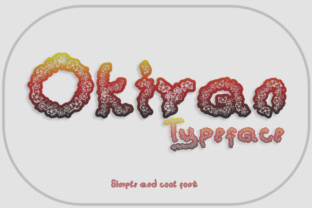
Okiran is not trying to be invisible. Display fonts by nature are meant to command attention, and Okiran does exactly that without resorting to gimmicks. Its letterforms feel carefully considered—there is a rhythm to the strokes, a consistency in weight, and a subtle character that separates it from the sea of overused typefaces. Whether you look at the uppercase glyphs or the lowercase set, you will notice a balance between structure and expressiveness. It is not a serif font in the traditional sense, nor is it a cold, mechanical sans serif font. It occupies its own space: clean enough for readability at larger sizes, yet textured enough to convey a brand’s personality.
Gblack Id has included basic punctuation, which matters more than many realize. A font that lacks proper punctuation can break the flow of a headline or tagline, forcing designers to improvise or switch typefaces mid-project. With Okiran, you get what you need for most display and editorial applications without hunting for missing glyphs. That attention to detail speaks to the font’s practical value.
Where Okiran Delivers Real Results
Okiran shines in contexts where you need a visual anchor. Consider logo design—a logo often lives on product packaging, digital screens, social media avatars, and even physical signage. A display font like Okiran can form the backbone of a wordmark or sit alongside a custom icon. Because it carries personality without screaming, it works for both modern startups and established businesses looking to refresh their visual identity.
In editorial design, Okiran can handle headlines, pull quotes, and section titles with confidence. Picture a lifestyle magazine spread or a minimalist book cover. The font’s proportions and spacing help establish a clear visual hierarchy, guiding the reader’s eye from the main headline to the supporting text. Pair it with a clean sans serif font for body copy, and you have a pairing that feels both deliberate and harmonious.
Packaging design is another natural fit. Whether you are working on a small-batch coffee bag, a skincare line, or a boutique wine label, Okiran brings a handcrafted feel that resonates with discerning customers. The font does not rely on excessive ornamentation—instead, it lets the letter shapes do the work. That restraint often leads to more memorable packaging because the brand name itself becomes the focal point.
Social media graphics and web design also benefit. In a crowded feed, a distinctive headline font can stop the scroll. Okiran works well for Instagram quotes, YouTube thumbnails, or landing page hero sections. Its legibility at display sizes means you can scale it down slightly for subheadings without losing clarity.
How Okiran Shapes Brand Perception and Readability
Typeface choices directly influence how an audience perceives a brand. A playful handwritten font suggests a different tone than a sharp geometric sans. Okiran sits in a sweet spot—it feels approachable but not casual, distinctive but not distracting. That makes it useful for brands that want to project confidence without arrogance, creativity without chaos.
Readability at display sizes is strong. The counters are open, the spacing is generous enough to prevent letters from colliding, and the overall contrast between thick and thin strokes creates a natural rhythm. When you are designing a billboard, a product label, or a hero banner, you need viewers to grasp the message in a split second. Okiran delivers that immediacy. The font also maintains consistency across different characters, which reduces visual noise and helps the brand identity feel cohesive.
Professionalism comes from consistency, and Okiran supports that by offering a unified voice across applications. When your logo, your website headline, your packaging, and your social media graphics all use the same typeface (or a thoughtful pairing), the audience subconsciously registers that coherence as trustworthiness. For small business owners and entrepreneurs who may not have a dedicated branding team, choosing a reliable display font like Okiran simplifies the decision-making process and elevates the entire visual ecosystem.
Practical Guidance for Using Okiran in Your Projects
Before you commit to any font for a commercial project, it pays to evaluate fit on several fronts. Start by asking yourself: does this typeface align with the emotional tone I want to communicate? If your brand values warmth, craftsmanship, and approachability, Okiran supports that. If you need something ultra-corporate or rigid, you might lean toward a more neutral sans serif font. The key is matching the font’s personality to your brand’s voice.
Testing font pairings is another essential step. Okiran pairs well with many sans serif fonts—look for one with neutral proportions and moderate contrast. A clean sans like Open Sans, Lato, or Montserrat can provide a stable foundation for body text while Okiran handles the headlines. Avoid pairing it with another heavily stylized display font, as that can create visual competition. Stick to one strong display voice and let the rest of the typography recede into the background.
Review the included styles before you buy. Okiran may come as a single weight or include a family with multiple weights and italics. For most branding projects, having at least a regular and bold weight is helpful. If you only need it for a single logo, a single weight may suffice. But if you plan to use it across packaging, web, and print, having more options gives you flexibility without forcing you to introduce a second display font.
Readability considerations matter even for display fonts. Test Okiran at the sizes you will actually use. On a large poster, it will sing. On a small product label, check that the thinner strokes remain visible. If you need to use it at smaller sizes, consider bumping up the tracking slightly to give each character room to breathe.
Commercial licensing is non-negotiable. When you purchase Okiran from Gblack Id or an authorized distributor, make sure the license covers your intended use—whether that is logo design, merchandise, digital ads, or printed materials. Using a font without proper licensing can create legal headaches down the road, especially if your branding gains traction. Treat fonts as the professional design assets they are. Investing in a commercial font like Okiran is a small price compared to the cost of redesigning a brand identity or dealing with a takedown notice.
Final Observations from a Design Perspective
What I appreciate most about Okiran is that it does not try to do everything. It knows it is a display font, and it owns that role. For designers, that clarity is a gift. You can bring it into a project, let it anchor the visual hierarchy, and then step back. The font does the heavy lifting without demanding constant attention.
For entrepreneurs and small business owners, choosing a typeface can feel overwhelming. There are thousands of options, and every designer has an opinion. But when you strip away the noise, the question is simple: does this font help my audience understand who I am and what I offer? With Okiran, the answer is often yes. It is approachable, professional, and distinct enough to leave an impression. Whether you are launching a new brand, refreshing an existing one, or working on a creative side project, Okiran deserves a spot in your shortlist.