Zen3: A Decorative Hand-Drawn Font for Designers and Hobbyists
What Is Zen3 and What Makes It Distinct?
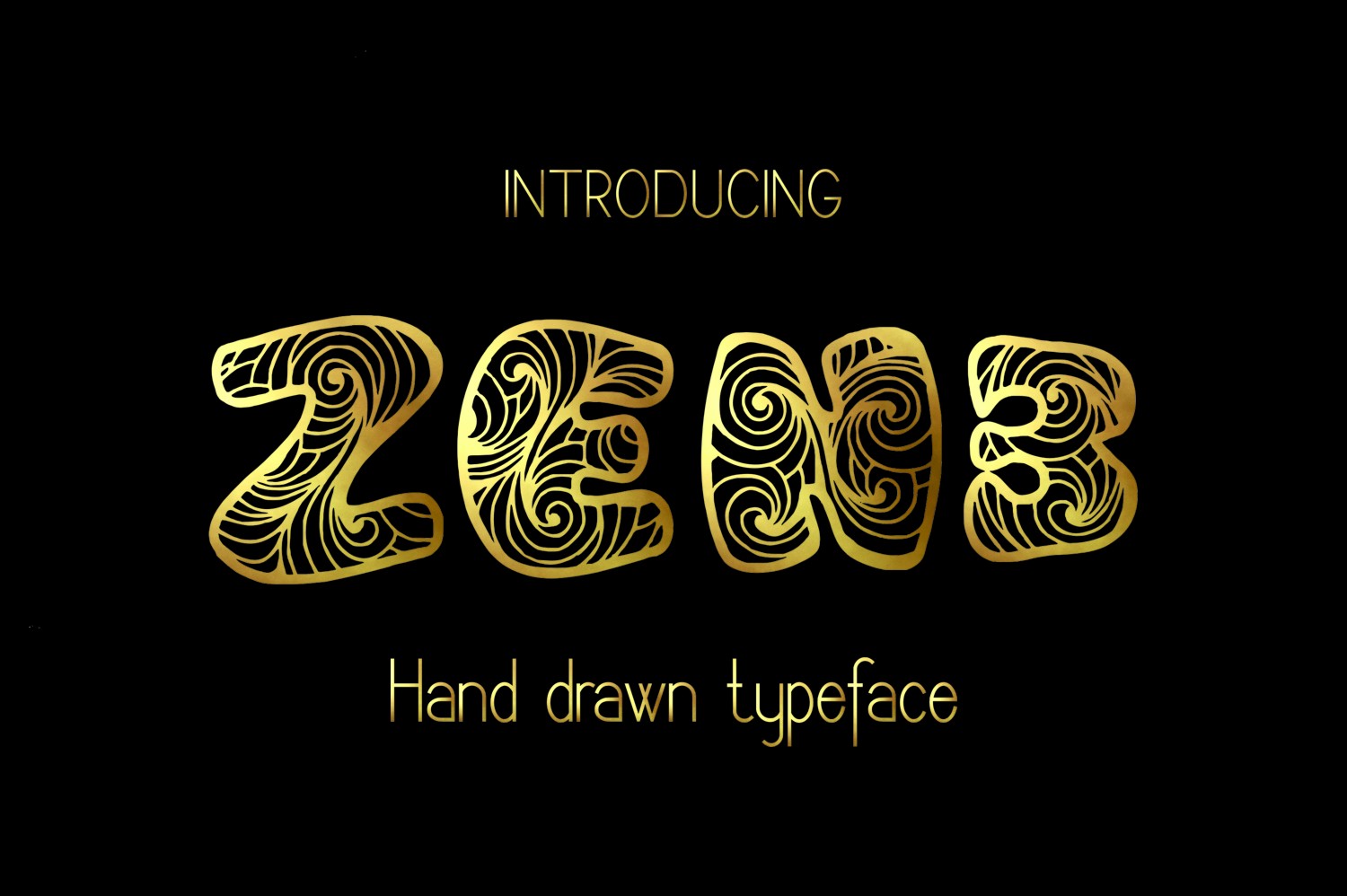
Zen3 is a decorative hand-drawn typeface that captures the loose, expressive quality of marker or brush lettering while offering a consistent set of characters suitable for digital and print projects. Its letterforms are slightly irregular, with organic curves and varied stroke widths that give each glyph a crafted, human feel. Unlike many digital fonts that aim for mechanical perfection, Zen3 embraces imperfection as a feature, making it a strong choice when you want a project to feel personal, approachable, or artisanal.
The font includes uppercase and lowercase letters, numbers, and basic punctuation, though like most hand-drawn fonts, its character set may be more limited than a text-oriented typeface. The design leans toward a casual, friendly aesthetic without becoming cartoonish. The strokes have a natural flow, as if created with a felt-tip pen on rough paper, which adds texture to any design. This makes Zen3 particularly useful for projects where a handcrafted look is central to the message.
One of the core aspects that sets Zen3 apart from standard decorative fonts is its balance between readability and personality. While it is not intended for body text or long paragraphs, individual letters and short phrases remain legible because the shapes do not stray too far into abstract territory. This balance is often difficult to achieve in hand-drawn fonts, as many lean too far toward either illegible art or overly tidy script. Zen3 sits in a middle ground that designers find valuable for headings, short quotes, and visual accents.
Comparing Zen3 with Other Hand-Drawn and Decorative Fonts
When evaluating Zen3 alongside other options in the hand-drawn and decorative font category, a few key dimensions emerge: letterform consistency, stroke texture, emotional tone, and practical versatility. Many hand-drawn fonts emphasize wild variation, with each letter looking completely different from the next. While that can be charming, it sometimes reduces legibility or makes the font feel chaotic. Zen3 offers a more controlled irregularity: the characters have a family resemblance, so the overall text reads as unified despite the handmade feel.
In contrast, smooth script fonts or elegant calligraphy styles prioritize flow and formality. They often work beautifully for wedding invitations or luxury branding but can feel out of place on a poster for a community event, a children’s coloring page, or a casual T-shirt design. Zen3’s rough, approachable vibe fits better in those informal, creative contexts. If you compare it to a clean sans-serif or a geometric display face, the difference is obvious: Zen3 brings warmth and spontaneity that no rigid, vector-perfect typeface can replicate.
Another comparison point is file format and licensing. Many free or low-cost hand-drawn fonts come with limited weights (often just one style) and may lack basic punctuation or accented characters. Zen3 typically offers a standard character set that covers common needs for English-language projects. Some alternative hand-drawn fonts may have more extensive sets or include multiple weights (light, bold, rough, etc.), but they may also come with higher price tags or restrictive licenses. Zen3 sits as a practical middle option: not the most feature-rich, but often sufficient for the creative tasks it is designed for.
When evaluating options, consider whether you need a font that works both in large display sizes and at small scale for details like line art or embroidery. Zen3 performs well at medium to large sizes (around 24 points and above), where its strokes retain clarity. At very small sizes, the hand-drawn details can become muddy, and you might be better served by a simpler, cleaner font.
Practical Applications: Where Zen3 Excels
Zen3’s design makes it a natural fit for several specific use cases. Understanding these can help you decide if it is the right tool for your project.
Titling and Headlines. Whether you are designing a magazine spread, a blog header, or a chapter opening in a book, Zen3 gives titles a handcrafted presence. It works well in combination with a simple serif or sans-serif body font, creating contrast between the warm, personal heading and the more neutral body text. For example, a travel blog might use Zen3 for the main title on its homepage and pair it with a clean sans-serif for the navigation and article text. The hand-drawn quality suggests exploration and human experience, which aligns with the blog’s theme.
Signage and Posters. Posters for concerts, art shows, local markets, or workshops often benefit from a font that feels immediate and handmade. Zen3 can be used for the main event name or key phrases. Because the letters have a natural unevenness, they catch attention without requiring elaborate effects. You might enlarge Zen3 for the headline of a poster and then use a simpler font for the date and location details. The contrast helps the hand-drawn element stand out as the focal point.
Flyers and T-Shirt Designs. For flyers promoting a community garage sale, a food truck festival, or a yoga class, Zen3 adds an inviting, non-corporate tone. On T-shirts, the font works well for short slogans, band names, or graphic elements that mimic hand lettering. Screen printing with Zen3 requires attention to stroke thickness: if the design is printed small, thin strokes might lose detail. Test the font at the actual print size to ensure readability. For larger prints on the back of a shirt or the front of a hoodie, Zen3’s texture becomes a visual asset.
Coloring Pages. Zen3’s hand-drawn appearance makes it an excellent choice for coloring page titles or instructions. Because the lines are not perfectly uniform, they invite the colorist to fill them in without being overly rigid. When used in a coloring book, the font can label images or provide short quotes. The organic quality matches the relaxed, creative intent of the activity. However, for very small lettering in a coloring page, consider whether each letter’s interior spaces (counters) remain open enough to be colored without confusion. Zen3 generally keeps openings clear, but it is wise to test a sample.
Embroidery Patterns. A less common but increasingly popular use for hand-drawn fonts is in embroidery, whether machine or hand-stitched. Zen3’s varied stroke widths and casual character shapes can translate well into thread if you plan the design carefully. The font’s uneven lines give an embroidered piece an authentic, hand-stitched look. For machine embroidery, you may need to convert the font into a stitch file, and the complexity of the design will affect stitch count and time. Simpler letters (like those without many tight curves) work best. For hand embroidery, Zen3 can be traced onto fabric as a pattern, and its friendly shapes are forgiving of slight stitching imperfections.
Strengths and Limitations: A Balanced Look
Like any creative tool, Zen3 has tradeoffs. Recognizing these will help you use it effectively and know when another option might serve you better.
Strengths include its unique personality, ease of pairing with other typefaces, and versatility across media. The font is lightweight in filesize and loads quickly in web contexts. It provides a hand-drawn aesthetic without requiring you to actually hand-letter each phrase, saving time in design workflows. For small business owners, social media managers, and DIY designers, Zen3 offers a way to achieve a custom look without hiring a lettering artist. Its approachable style is appropriate for audiences from children to adults, depending on context.
Limitations center around size constraints, limited character sets, and lack of weight variations. If you need a bold version for heavy headlines or a light version for delicate captions, Zen3 may not offer those options within the same font family. You might need to duplicate it and apply heavy stroke effects, which can distort the hand-drawn quality. Additionally, the font may not include special characters, accented letters, or currency symbols beyond basic ones. Check the specific version you have or intend to purchase. For multilingual projects, you may need a more comprehensive font.
Another limitation is that the hand-drawn style can clash with ultra-modern, minimalist, or corporate branding. If your project requires a sleek, polished, or professional tone, a hand-drawn font like Zen3 may feel misaligned. In those cases, a clean sans-serif or a refined serif would be more appropriate. Similarly, for long blocks of text, Zen3 is unsuitable because the lack of consistent metrics and the irregular letterforms tire the eye quickly.
Is Zen3 the Right Choice for Your Project?
Deciding whether to use Zen3 depends on the project’s goals, audience, and medium. Here are some guiding questions to help you evaluate:
- What is the emotional tone you want to convey? If you need warmth, creativity, informality, or human touch, Zen3 is a strong candidate. If you need authority, elegance, or precision, look elsewhere.
- What is the medium and size? For large headings on posters, flyers, or T-shirts printed at medium to large size, Zen3 works well. For small text in a business card or a tiny label, a simpler, more refined font is safer.
- Will the font be used in combination with other typefaces? Zen3 pairs nicely with simple serifs (for a vintage feel) or sans-serifs (for a modern contrast). If your design already has many typographic elements, using Zen3 as a single accent may be best.
- Do you need special characters or multiple weights? If your project requires extensive language support, mathematical symbols, or a range of weights (thin to black), consider a more comprehensive family. Zen3 may be too limited.
- What is your budget and licensing needs? Some versions of Zen3 are available as free downloads for personal use, while commercial use may require a license. Always verify the terms. If you need a font for commercial merchandise or client work, ensure you have the appropriate rights.
Making an Informed Decision
Zen3 is a niche font that excels when its hand-drawn quality aligns with the project’s purpose. It is not a universal solution, but it is not meant to be. Its value lies in the ability to add personality and a human touch quickly. When you compare it to other decorative fonts, its relative clarity and consistent irregularity make it a practical choice for intermediate and experienced designers alike.
Think of Zen3 as a tool in your typographic toolkit—one that you reach for when the project calls for spontaneity, warmth, and a creative spark. For serious corporate reports, academic journals, or minimalist branding, you will likely choose a different typeface. But for sign-making, poster design, T-shirt graphics, coloring pages, and embroidery patterns, Zen3 offers a distinctive option that can save time while delivering a custom, handcrafted result.
If you are exploring alternatives, look for fonts that offer similar hand-drawn textures but with variations in stroke style or additional weights. Test them side by side with Zen3 in your actual design layout. Pay attention to spacing, readability at intended sizes, and emotional impact. The best choice is the one that serves your message and your audience most effectively.
By understanding both the strengths and limitations of Zen3, you can make a confident decision about whether it belongs in your current project—or perhaps in the next one. Its charm and utility have earned it a place among hand-drawn fonts that designers return to when they want to break away from the perfectly uniform and embrace the beautifully imperfect.