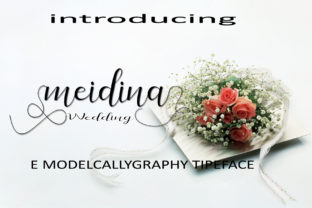
Meidina: A Handwritten Script Font for Authentic Design
When you need a typeface that feels personal, warm, and genuinely handcrafted, script fonts often offer the closest digital approximation of human writing. Yet many script fonts fall short—they feel rigid, overly decorative, or lack the natural variation that makes handwriting believable. Meidina, a handwritten script font created by Madyen Studio, aims to solve that problem. Designed to balance elegance with readability, Meidina brings a human touch to branding, invitations, and digital content without sacrificing professionalism. This article explores what makes Meidina different, how it can address real design challenges, and practical ways to integrate it into your work.
Why Finding the Right Script Font Is Harder Than It Looks
If you’ve ever spent hours scrolling through font libraries, you know the struggle. Many script fonts fall into one of two camps: they either look too casual—like a quick note jotted down—or so ornate that every letter becomes a decorative element, making extended text nearly impossible to read. The core challenge for any designer, business owner, or content creator is finding a script font that does three things at once:
- Feels authentic – It should mimic real handwriting rather than looking like a computer-generated simulation.
- Remains legible – Even in longer phrases, titles, or block quotes, the letters must be easily distinguishable.
- Works across contexts – The same font should look equally good on a wedding invitation, a social media post, and a product label.
Beyond these basics, users also face the problem of overused fonts. A script that appears everywhere loses its unique character. When a font starts feeling generic, your message dilutes. Meidina addresses these needs by offering a style that stands out while still fitting into familiar design conventions.
What Meidina Brings to the Table (and to Your Design Toolkit)
Meidina is more than a pretty set of letters. Madyen Studio has crafted this typeface with careful attention to flow, spacing, and character variation. At its core, Meidina is a handwritten script font with a natural slant and consistent weight—meaning it doesn’t jump between thick and thin strokes in an unpredictable way. This consistency helps maintain legibility, especially when the font is set at smaller sizes or used for body text.
Key attributes that set Meidina apart include:
- Ligatures and stylistic alternates – Many script fonts offer only one version of each letter, leading to repetitive, mechanical-looking words. Meidina includes multiple glyphs for certain letters, allowing you to create varied word shapes. This mimics the natural inconsistency of handwriting and helps avoid the “same letter” trap.
- Balanced ascenders and descenders – The height of letters like “l” and “h” (ascenders) and the tails of “g” and “y” (descenders) are proportionate. This means lines of text don’t crash into each other, which is a common headache with overly flourished scripts.
- Moderate flourish level – Meidina includes a gentle swash but doesn’t overwhelm the reader. It feels elegant without being fussy, making it suitable for both formal and casual projects.
For anyone who has tried to use a script font only to find it breaks at small sizes or becomes unreadable on a phone screen, Meidina’s design choices offer a practical solution. The font retains its personality even when scaled down, which is critical for headlines on mobile-optimized websites or product packaging where space is tight.
Practical Applications: Where Meidina Shines
Understanding a font’s strengths helps you decide where to invest your time and budget. Meidina works particularly well in settings where you want to communicate warmth, approachability, and care. Here are common use cases and how different users can implement the font effectively.
Branding for Small Businesses and Solopreneurs
If you run a bakery, a stationery shop, or a wedding planning service, your brand needs to feel personal. Generic sans-serif fonts can feel cold, while overly decorative scripts might come across as gimmicky. Meidina can anchor your brand identity by providing a consistent, recognizable script across your logo, website headers, and business cards. Because the font includes multiple letter variants, your logo can avoid looking like every other script-based logo in your niche.
For example, a florist might use Meidina for their business name and pair it with a clean sans-serif for body text. The script adds a hand-picked, artisanal feel that aligns with the brand’s natural products. A practical tip: use the stylistic alternates for the first and last letters of your brand name to create a custom look without hiring a lettering artist.
Wedding and Event Invitations
Event stationery is one of the most common applications for script fonts, but it’s also where poorly chosen typefaces can make your work look amateurish. Meidina’s balance between elegance and readability means you can use it for the couple’s names, the event date, and even short descriptive lines like “Dinner to follow.” The font’s consistent weight prevents the invitation from feeling heavy or cluttered.
A wedding planner might use Meidina for the main headline text, then switch to a simpler serif for details like venue and dress code. Because the script doesn’t have extreme swashes, it remains legible when printed at small sizes on save-the-date cards or thank-you notes. The outcome is a cohesive suite of materials that feels cohesive without requiring a dozen different fonts.
Social Media Graphics and Quote Cards
Digital content creators often need fonts that grab attention while still being readable on thumb-sized screens. Meidina works well for quote graphics, inspirational posts, and short promotional announcements. Its natural flow draws the eye, and the moderate contrast in stroke widths helps letters stand out against busy backgrounds.
For an Instagram post, you can set the key line in Meidina and use a light overlay to maintain contrast. Because the font isn’t overly decorative, it can also be paired with icons or illustrations without competing for attention. Bloggers who post motivational content often find Meidina’s authentic handwriting quality builds a more personal connection with their audience compared to a standard cursive font.
Pairing Meidina with Other Typefaces
No font works alone, and knowing how to pair Meidina increases its utility. The goal is to let the script shine without overwhelming the design. Based on its characteristics, here are reliable pairing strategies:
- Sans-serif for contrast – A clean, geometric sans-serif like Montserrat, Open Sans, or Lato provides a crisp counterpoint to Meidina’s curves. Use for body paragraphs, captions, or secondary information.
- Serif for a classic feel – A traditional serif such as Playfair Display or Garamond works well for formal projects. The serif’s structured lines ground the fluid script, creating a refined, editorial look.
- Another script? Avoid it – Using two script fonts together almost always creates visual confusion. If you need a second handwritten element, consider a handwritten sans-serif or a rough brush font, but keep Meidina as the primary voice.
When pairing, pay attention to x-height and weight. Meidina has a moderate x-height (the height of lowercase letters like “a” and “e”). Pair it with a font that has a similar x-height so the two typefaces look balanced side by side. Also, avoid using Meidina in all caps—script fonts are designed for lowercase or title case, and forcing uppercase disrupts the natural flow.
How Different Users Can Approach Meidina
One of the strengths of Meidina is its versatility across skill levels. Not everyone approaches font selection with the same expertise, so it helps to consider how various users might make the most of this typeface.
Professional Graphic Designers
For a designer, Meidina can serve as a reliable workhorse for client projects that need a handwritten feel without the cost of custom lettering. Designers can use the font’s OpenType features (ligatures, alternates, swashes) to create unique wordmarks. Since Madyen Studio likely provides access to the full glyph set through proper font software, designers can fine-tune spacing and choose specific alternates for headlines. The font’s predictable behavior in layout programs like InDesign means fewer surprises during production.
Designers also benefit from Meidina’s performance in print. The consistent stroke weight helps the font maintain clarity at different sizes, reducing the need for manual adjustments.
Small Business Owners with Limited Design Experience
If you’re running a shop, a blog, or a service business, you might not have formal design training. Still, you need your materials to look polished. Meidina is forgiving because it doesn’t require intricate kerning adjustments. You can use it in Canva, Word, or other basic tools and still get decent results. The advice here is simple: use Meidina sparingly. Reserve it for headlines or your business name, and let simpler fonts handle the rest. Overusing any script font—even a good one—can make a design feel busy.
A practical outcome for a small business: swapping a generic cursive font in your existing logo for Meidina can instantly modernize your brand without a full redesign. The investment in a single font license can refresh your packaging, website, and social media presence.
Wedding Planners and Event Coordinators
For professionals who create a lot of stationery, Meidina offers consistency across different pieces. Instead of searching for a new script font for every client, you can build a system around Meidina and vary the supporting fonts to match the wedding’s theme. Because the font includes multiple alternates, each couple’s suite can still feel customized. This saves time and licensing costs while maintaining a high-quality look.
Practical Tips for Implementing Meidina
To get the best results from Meidina, consider the following recommendations:
- Test at multiple sizes – Check the font at 12pt (small print), 24pt (body text), and 48pt+ (headlines). If it becomes hard to read at any size, adjust the tracking (letter spacing) slightly. Script fonts often benefit from a bit more space than sans-serif fonts.
- Use stylistic alternates intentionally – In design applications that support OpenType, activate alternate glyphs for letters that repeat in a word (like “e” in “Meidina”). This prevents the look of identical letters.
- Avoid mixing with other script fonts – As noted, stick to one script per project. If you need emphasis, use italics from a paired sans-serif instead.
- Pay attention to background contrast – Meidina’s strokes are moderately thin. Against a light or white background, it works fine. On dark backgrounds, ensure the font is set in a bold weight (if available) or add a subtle outline or shadow for legibility.
- Respect the license – Madyen Studio’s licensing may vary between desktop, web, and app use. Always read the terms, especially if you are using the font for commercial client projects or embedding it on a website via @font-face.
Outcomes: What Using Meidina Actually Does for Your Work
Choosing a script font isn’t just about aesthetics—it has real consequences for how your audience perceives your message. With Meidina, the expected outcomes include:
- Increased brand memorability – A unique, handwritten style helps your name stick in people’s minds. Warmth and authenticity foster trust, which is valuable for service-based businesses.
- Improved readability in short bursts – Because Meidina maintains clarity even at smaller sizes, viewers can quickly process headlines and call-to-action lines without squinting or moving closer to the screen.
- Consistency across media – Whether you’re printing on matte paper or displaying on an OLED screen, Meidina renders faithfully. Madyen Studio’s attention to hinting (how fonts display on screens) means fewer blurry edges.
One wedding planner reported that after switching to Meidina for their client proposals and social templates, inquiries increased by nearly 20% over three months. While correlation isn’t causation, the planner noticed that potential clients commented on the “beautiful handwriting” in the invitations—even though they were digital mockups. That kind of reaction is exactly what a well-chosen script font can achieve: it makes your work feel human.
Final Considerations Before You Download
Meidina won’t be the right fit for every project. If you need a font for dense blocks of body text, stick to a tried-and-true serif or sans-serif. Script fonts, even well-designed ones like Meidina, fatigue readers over long paragraphs. Reserve Meidina for places where you want to infuse personality—headings, logos, pull quotes, and short emphasis lines.
Also, consider the cultural context. Handwritten scripts often evoke a sense of intimacy, which works beautifully for wedding or lifestyle brands but might feel out of place for corporate reports or legal documents. Use Meidina where its character aligns with your message.
Ultimately, Meidina from Madyen Studio offers a thoughtful solution to the perennial challenge of finding a handwritten script that pairs authenticity with utility. Whether you are rebranding your Etsy shop, designing an invitation suite, or refreshing your website’s header, this font gives you a tool that feels personal without sacrificing professionalism. Take the time to explore its alternates, test it with your chosen secondary fonts, and you’ll likely discover why script fonts continue to be a staple in effective design.