Sehia Script: A Thin Elegant Calligraphy Font with Two Distinct Voices
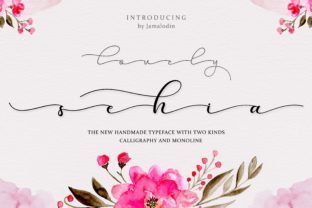
If you have ever spent time hunting for a script font that feels genuinely handwritten without screaming for attention, you have likely run into the same frustration. Many calligraphy fonts lean heavy on flourishes or mimic a broad-nib pen, which can feel overwhelming on a page. Sehia Script takes a different path. Created by Jamalodin, this typeface offers a thin, airy elegance that stays readable and refined across a surprising range of projects. What makes it especially interesting is that it comes in two distinct versions: a Calligraphy style and a Monoline style. That duality alone opens up practical possibilities for designers, small business owners, event planners, and anyone who works with words in a visual way.
Let us walk through what this font actually does in real-world settings, who might reach for it, and what to keep in mind before you commit it to a project.
What Sehia Script Actually Brings to the Table
At its core, Sehia Script is a thin, elegant calligraphy font. The letterforms are light and flowing, with a natural rhythm that mimics a skilled hand moving across paper. The Calligraphy version carries that classic pointed-pen look, with varying stroke widths and subtle swashes that give it a handcrafted feel. The Monoline version strips that variation down, keeping a consistent stroke width throughout. That means you get two personalities from one typeface: one that feels traditional and ornate, and another that feels modern and clean.
For someone looking to add a personal touch without drifting into decorative overload, this balance is a practical advantage. The thin weight keeps the font from dominating a layout, which is useful when the message itself needs to stand out.
Branding for Small Businesses and Solopreneurs
Small business owners often face a tricky decision when choosing a brand font. They want something that feels personal and approachable, but they also need it to work across a logo, a website header, a product label, and maybe even a social media graphic. Sehia Script handles that range better than many heavier calligraphy fonts because its thin lines do not muddy the details when scaled up or down.
A local coffee shop, for instance, might use the Calligraphy version on a chalkboard-style menu header to evoke a cozy, handcrafted atmosphere, then switch to the Monoline version for a clean tagline on a coffee bag label. The visual connection remains, but the tone shifts naturally from warm and organic to crisp and polished. That kind of flexibility matters when you are managing a brand identity on a budget and cannot afford a dozen different typefaces.
Wedding Stationery and Event Invitations
Event invitations, especially for weddings, are one of the most common use cases for script fonts. But not every script font suits every couple. Sehia Script appeals to those who want something elegant without going full vintage or over-the-top decorative. The thin strokes work beautifully on a cream or soft pastel background, and because the letterforms stay legible even at smaller sizes, you can use it for the main event name and then drop it down for secondary details like date and location.
Planners and couples who prefer a minimalist or modern-classic aesthetic often gravitate toward the Monoline version for save-the-date cards, then bring in the Calligraphy version for the formal invitation itself. That small shift can carry a visual narrative from casual announcement to formal ceremony without needing a completely different design system.
Graphic Designers Looking for Reliable Versatility
For designers, a font that comes in two versions is immediately useful. It reduces the need to hunt for a complementary script when moving between projects or even between sections of the same project. Sehia Script allows a designer to maintain visual consistency while adjusting tone. A book cover for a literary novel might use the Calligraphy version for the title to suggest depth and tradition, while the back cover copy or chapter headings use the Monoline version for clarity. The reader experiences a cohesive feel without conscious effort.
Designers also appreciate the thin weight when layering text over images. Heavier scripts tend to compete with photographic backgrounds, but Sehia Script sits lightly, making it easier to retain the image detail while still delivering the message. That is a small technical advantage that saves time during layout.
Content Creators and Social Media Managers
Social media graphics often suffer from text that is too bold or busy to read on a small screen. Sehia Script, especially the Monoline version, reads well on mobile devices because the consistent stroke width keeps each letter distinct. A content creator who posts inspirational quotes, poetry, or personal branding content can use this font to maintain a cohesive visual style across posts without needing to adjust kerning or worry about readability every time.
For short-form video thumbnails or story slides, the thin elegance also helps the text feel less aggressive. It invites the viewer to read rather than shouting for attention, which aligns well with softer content themes like mindfulness, journaling, or creative lifestyle topics.
Product Packaging and Small-Run Goods
Anyone who sells handmade goods, from candles to soaps to stationery, knows that packaging can make or break the perceived value of the product. A thin, elegant script like Sehia Script communicates care and attention to detail. On a small label for a perfume oil, the Calligraphy version adds a bespoke feel. On a shipping box insert or a thank-you card, the Monoline version feels thoughtful without being fussy.
For makers who print labels at home on adhesive sheets, the thin strokes also mean less ink consumption and fewer issues with bleeding on inexpensive paper. That is a practical detail that matters when margins are tight.
Legibility at Small Sizes
No script font is perfectly legible at tiny sizes, and Sehia Script is no exception. Below about 10 or 11 points, especially in the Calligraphy version, the thin hairlines can start to disappear on screen or in print. If you plan to use it for body text or small captions, the Monoline version is the safer bet. For anything below 8 points, it is probably worth switching to a clean sans-serif for readability and reserving Sehia Script for headings or accents.
Paper and Screen Choices
The look of this font changes noticeably depending on the medium. On rough or uncoated paper, the fine strokes of the Calligraphy version may catch or blur, losing some of the crisp elegance. Smooth, coated paper or a high-resolution screen shows the font at its best. If you are printing on textured stock, consider bumping up the weight slightly or testing the Monoline version first.
Pairing with Other Fonts
Because Sehia Script is thin and light, it pairs well with heavier serif or sans-serif fonts. A common approach is to use a sturdy sans-serif like Montserrat or a classic serif like Garamond for body text, and let Sehia Script handle the headlines or accent lines. Avoiding pairing it with another script font is a good rule of thumb, as the visual competition can muddy the hierarchy of the page.
Strengths That Make It Worth Trying
- Two distinct versions give you more mileage from a single purchase, which is practical for budget-conscious users or those who like to keep their font library lean.
- Thin elegance means it integrates well into both modern and classic layouts without overwhelming other elements.
- Readability is higher than many decorative calligraphy fonts, especially in the Monoline version, making it a more reliable choice for real-world communication.
- Handcrafted feel adds a human touch that resonates well with audiences looking for authenticity in branding, events, or personal projects.
Limitations to Keep in Mind
- Limited weight options mean there is no bold or heavy version, so it will not work for projects that need strong typographic impact or high contrast.
- Not ideal for large blocks of text, even in Monoline, as the thin strokes can cause eye fatigue over long reading sessions.
- May require careful kerning in some letter combinations, especially in the Calligraphy version where swashes and flourishes need room to breathe.
Final Observations from Practical Use
Sehia Script is not a font that tries to do everything. Its strength lies in restraint. It works best when the goal is to communicate warmth, care, and a personal touch without pushing into ornamental territory. Whether you are designing a wedding suite, building a small brand identity, or simply looking for a script that will not fight with your content, the two versions give you room to experiment and adapt.
For anyone who has felt that most script fonts are either too heavy or too fussy, Sehia Script offers a middle ground that is both practical and beautiful. And in a world where typography choices often feel like compromises between style and function, that middle ground is exactly where most real projects live.