Confident: The Quiet Power of a Fluid Thin Script in Modern Design
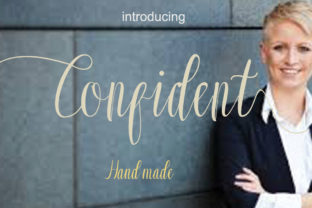
Typography speaks before a single word is read. Among the vast landscape of typefaces, script fonts occupy a unique space — they carry personality, emotion, and a sense of handcrafted humanity. Confident, a fluid thin script font, embodies this ethos with a refined aesthetic that balances lightness with presence. Its slender strokes and flowing curves offer designers, creators, and businesses a tool that whispers authority without shouting. This article explores the design philosophy, practical applications, and nuanced considerations of working with a typeface like Confident, and why thin script fonts are gaining traction across industries.
The Visual Voice of Script Fonts
Script typefaces have long been associated with elegance, formality, and personal touch. From wedding invitations to luxury branding, they evoke a sense of intimacy and craftsmanship. However, not all script fonts are created equal. The emergence of fluid thin script fonts like Confident represents a shift toward minimalism and sophistication. Rather than relying on heavy swashes or elaborate flourishes, Confident uses delicate, uninterrupted strokes that feel both modern and timeless.
The thinness of the font does not equate to weakness. On the contrary, the consistent line weight and fluid connections between letters create a visual rhythm that feels intentional and assured. This is the quiet power of Confident — it commands attention through subtlety, not force. For designers seeking to convey clarity, precision, and understated luxury, such a typeface becomes an indispensable tool.
Defining Characteristics of Confident
Confident is not merely a thin script; it is a study in balance. Its characters are constructed with flowing, continuous strokes that mimic natural handwriting, but with a consistency that only digital precision can achieve. Key characteristics include:
- Fluid connectivity: Letters join seamlessly, creating a sense of uninterrupted motion across words and phrases.
- Thin, consistent stroke weight: The line thickness remains uniform, lending an air of delicacy without fragility.
- Generous x-height: Despite its thinness, the font maintains readability through well-proportioned lowercase letters.
- Subtle slant: A gentle italic angle adds dynamism while preserving legibility at various sizes.
- Minimal ornamentation: Swashes are restrained, ensuring the font remains versatile across different contexts.
These attributes make Confident suitable for both display and body text applications, provided the medium supports its delicate nature. Understanding these characteristics helps users decide when and where to deploy the font for maximum impact.
Where Fluid Thin Scripts Excel
One of the most common questions about thin script fonts is their practicality. Because of their light stroke weight, they require careful consideration of size, background, and viewing distance. However, when used appropriately, Confident excels in a range of scenarios:
- Luxury branding and packaging: The font’s elegance aligns naturally with high-end products, from cosmetics to fine stationery.
- Invitations and event materials: Weddings, galas, and exclusive gatherings benefit from the personal, handcrafted feel of Confident.
- Digital headlines and hero sections: On screens with high resolution, the thin strokes appear crisp and sophisticated, drawing the eye without overwhelming.
- Social media graphics and quotes: The font’s fluidity adds a human touch to otherwise digital spaces, increasing engagement and shareability.
- Product labels and certificates: A thin script conveys authenticity and attention to detail, reinforcing the value of the item.
Each of these use cases shares a common thread: the need for a typeface that communicates care, refinement, and individuality. Confident fills this niche admirably, offering a visual voice that feels both personal and professional.
Balancing Elegance with Readability
Readability is a primary concern with any script font, and thin scripts are no exception. The delicate strokes of Confident can pose challenges at small sizes or on low-contrast backgrounds. However, several strategies mitigate these issues:
- Adequate spacing: Generous letter-spacing (tracking) prevents characters from blending together, especially in all-caps settings.
- Contrasting backgrounds: Dark text on light backgrounds yields the best legibility; reverse applications require careful testing.
- Appropriate sizing: Using Confident at 18pt or larger for body text ensures strokes remain visible and distinct.
- Pairing with a simpler font: Combining Confident with a clean sans-serif or serif for supporting text creates visual hierarchy and improves overall readability.
Designers and content creators should test the font in the intended environment before committing. A quick print or screen proof reveals whether the thin strokes hold up under real-world conditions. When these considerations are addressed, Confident delivers a reading experience that is both beautiful and functional.
The Psychology of Thin Script Typography
Typography influences perception. Research in design psychology suggests that thin, delicate typefaces are associated with traits such as sophistication, sensitivity, and refinement. A fluid thin script like Confident amplifies these associations by adding a layer of human warmth and movement. The flowing connections between letters mimic the natural rhythm of handwriting, which can evoke feelings of authenticity and personal care.
For businesses, this translates into brand trust and emotional connection. A company that uses Confident on its packaging or website signals that it values quality, attention to detail, and a personal relationship with its audience. Conversely, overusing such a font in contexts that demand boldness or urgency may undermine its intended effect. Context, as always, determines meaning.
Educators and researchers studying visual communication note that thin scripts are particularly effective in environments where the audience already possesses a high degree of interest or engagement. For example, a luxury watch brand’s website using Confident for product names reinforces the exclusivity of the item. A hobbyist creating personalized stationery similarly benefits from the font’s intimate tone.
Practical Considerations for Designers and Creators
Working with a fluid thin script font requires a thoughtful approach. Here are actionable insights for professionals and hobbyists alike:
- File format and licensing: Ensure the version of Confident you use includes the necessary weights, ligatures, and alternates. Web font licenses differ from desktop licenses, so verify usage rights for your specific project.
- Testing across devices: Display rendering varies between operating systems and browsers. Check your designs on iOS, Android, Windows, and macOS to confirm consistent appearance.
- Pairing recommendations: Confident works beautifully with minimalist sans-serifs (like Helvetica Light or Lato) and with classic serifs (like Didot or Playfair Display) for contrast.
- Avoiding overuse: Reserve Confident for headings, signature lines, or short emphasis passages. Long blocks of thin script text tire the reader’s eye.
- Print vs. digital: In print, paper quality matters. Uncoated or textured papers may absorb ink and thicken thin strokes; glossy or coated papers preserve the intended delicacy.
These tips help users avoid common pitfalls and maximize the aesthetic potential of Confident. The goal is not to constrain creativity, but to channel it effectively.
Confident in Digital and Emerging Media
As screen resolutions increase and variable font technology advances, thin script fonts are becoming more viable in digital environments. High-DPI displays (Retina, 4K, and beyond) render Confident with exceptional clarity, making it suitable for web and mobile interfaces where elegance is desired. Emerging media such as augmented reality (AR) and digital signage also benefit from the font’s clean, fluid lines.
In user interface (UI) design, Confident can be used for hero headings, onboarding screens, and call-to-action buttons — but always with careful consideration of contrast and size. The font’s thin strokes mean that it should never be the sole typeface for navigation or critical information. Instead, it functions as an accent, a visual highlight that draws the user’s attention to key messages.
Content creators working in video and motion graphics will appreciate how Confident animates. Its fluid connections create natural points for kinetic typography, where letters can flow into each other with smooth transitions. This makes the font a strong candidate for title sequences, lower thirds, and social media stories.
Pairing Confident with Other Typefaces
No font exists in isolation. The success of a design often hinges on how well typefaces complement one another. Confident pairs effectively with several categories of fonts:
- Minimalist sans-serifs: Fonts like Montserrat Light, Roboto Thin, or Open Sans Light provide a clean, neutral counterpoint that lets Confident shine.
- Classic serifs: Didot, Bodoni, or Georgia introduce contrast in both stroke weight and formality, creating a dynamic, editorial feel.
- Geometric fonts: Circular or Futura-style typefaces offer a modern, structured backdrop for the fluidity of Confident.
- Other scripts: Combining Confident with a more ornate or bold script can create hierarchy, but requires careful management to avoid visual clutter.
The key is to establish a clear hierarchy: Confident takes the lead in expressive or emphasis roles, while its partner handles readability and information density. Business owners and marketers can use this strategy to create cohesive brand systems that feel both curated and accessible.
Real-World Applications and Observations
Across industries, fluid thin script fonts are appearing in contexts that once favored traditional serifs or sans-serifs. Boutique hotels use them on room keys and amenity cards. Artisanal food brands place them on packaging to convey craft and quality. Digital creators incorporate them into video thumbnails and quote graphics for a distinctive, polished look.
One notable observation is the growing use of thin scripts in educational materials — not for long-form reading, but for section headers, pull quotes, and decorative elements. Researchers studying typography in learning environments note that visual variety can enhance engagement, provided it does not impede comprehension. Confident fits this role when used sparingly and with intention.
Another trend is the blending of handwriting-style fonts with minimalist design principles. Confident represents this intersection beautifully: it retains the organic feel of handwriting while adhering to the clean, uncluttered aesthetics of modern design. This duality appeals to a broad audience, from creative professionals to corporate clients seeking a human touch.
Expert Tips for Working with Thin Scripts
Industry professionals who regularly work with script fonts offer several insights specific to thin styles:
- Never use thin scripts on low-resolution screens. The strokes will alias and appear jagged. Always prefer vector formats and high-resolution output.
- Consider the emotional tone. Confident conveys grace and calm. Avoid using it in contexts that require urgency or high energy, unless balanced by other design elements.
- Ligatures are your friend. Many script fonts include stylistic alternates and ligatures that enhance flow. Explore the full character set of Confident to unlock its expressive potential.
- Test in grayscale. A font that relies on color contrast for legibility may fail in black-and-white applications. Confident performs well in monochrome, but always verify.
- Respect the font’s origin. A fluid thin script is not a workhorse. It is a specialty tool, best used where its unique qualities can be appreciated.
Following these guidelines ensures that your use of Confident elevates rather than undermines the overall design.
The Future of Thin Script Typography
As digital design continues to evolve, the demand for nuanced, expressive typography grows. Variable font technology, which allows a single font file to offer a range of weights and styles, will likely include thin script options that adapt to different contexts. Confident stands at the forefront of this movement, demonstrating that thinness need not compromise personality or readability.
Emerging platforms — from virtual reality interfaces to interactive e-books — call for typefaces that convey warmth and human presence. Fluid thin scripts, with their handcrafted origins and modern precision, are well-positioned to meet this need. Designers, educators, and business owners who embrace this style early will differentiate their work in an increasingly crowded visual landscape.
Ultimately, the success of a font like Confident depends not on trends but on its ability to communicate meaningfully. When chosen with intention, it becomes more than a typeface — it becomes a voice. And in a world saturated with information, a clear, confident voice is exactly what stands out.