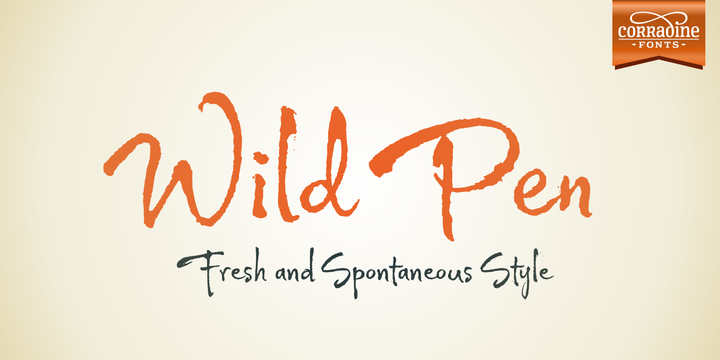
Wild Pen Family: Handwritten Fonts with Authentic Ink Character
Typography choices often reveal more about a brand or project than people realize. A clean sans-serif might feel corporate, a delicate script might whisper elegance, but a truly handwritten typeface tells a story of spontaneity and human touch. That is exactly what Wild Pen Family delivers—a collection of five handwritten fonts born from an unconventional tool: a pen made from a recycled plastic bottle. The result is typography that feels alive, unpredictable, and refreshingly honest.
If you have ever struggled to make digital text look less sterile or wished your printed materials carried even a fraction of the personality found in hand-lettered notes, this font family might be worth a serious look. Let us explore what makes it distinctive, where it shines, and how you might put it to work.
A Font Born from Experimentation
Most fonts begin with precise vectors and careful spacing. Wild Pen Family started differently. The designer created an experimental writing instrument from a recycled plastic bottle, then used it to produce strokes that no mouse or stylus could replicate. The pen itself gives the letterforms their character: irregular line widths, unexpected ink pools, and tiny splatters that would normally be edited out of a digital font. Instead of removing those imperfections, the designer preserved them.
The complete family includes five distinct fonts, each sharing the same underlying personality while offering enough variation to prevent monotony. You can use them individually or mix them across a single document to simulate the natural inconsistency of real handwriting. That mixability is one of the family's strongest assets—it allows designers to build text that reads as genuinely handwritten rather than mechanically repeated.
What Makes Wild Pen Family Stand Out
Several qualities set this typeface apart from standard handwritten fonts available today.
Spontaneous, Unpredictable Strokes
Most handwritten fonts rely on carefully repeated letterforms. You see the same a and same t over and over, which eventually reveals the digital origin. Wild Pen Family avoids that trap through its construction. The recycled plastic pen produced strokes that vary in thickness and angle even within a single character. When you combine multiple fonts from the family, the text gains a rhythm that feels organic.
Presence of Ink Drops and Blots
Not every project needs pristine perfection. Sometimes a small ink blot or a trailing drop adds exactly the right amount of texture. These details appear naturally throughout the family, giving the letters a tactile quality that standard fonts lack. The ink effects are not overpowering—they appear where a real pen might have left them, adding authenticity without distracting from readability.
Five Fonts, One Cohesive Voice
Having five variations within one family means you can switch between fonts for different sections of a project while maintaining visual continuity. One font might work well for headlines, another for body text, and a third for pull quotes or annotations. The family works together like a set of pens that all use the same ink but write with slightly different pressure and speed.
Practical Applications Across Different Contexts
Understanding a font's character is one thing; knowing where to apply it is another. Here are realistic scenarios where Wild Pen Family can make a genuine difference.
Branding and Logo Work
Small businesses, artisans, and creative professionals often need branding that feels personal without looking amateurish. A font with hand-drawn authenticity can convey craftsmanship, approachability, and originality. A coffee shop, a pottery studio, or a freelance illustrator might use Wild Pen Family for their primary logo mark, then carry one of the other variants into menus, business cards, or social media graphics. The recycled plastic pen origin also gives the font a subtle sustainability story—a detail that might resonate with environmentally conscious customers when shared in brand messaging.
Digital Content and Social Media
Social feeds are crowded with polished, templated content. A handwritten font can cut through that noise by offering something that looks personal and immediate. Quotes, announcements, or short-form blog headers set in Wild Pen Family invite engagement because they feel less like corporate communication and more like a note from a real person. The ink blots and varied strokes translate especially well at larger display sizes, making them ideal for Instagram stories, YouTube thumbnails, or email newsletter headers.
Educational and Instructional Materials
Teachers, tutors, and course creators often want materials that feel encouraging rather than institutional. Worksheets, study guides, or presentation slides using a handwritten typeface can reduce the intimidating feel of formal documents. Wild Pen Family works well for short instructions, vocabulary lists, or annotation-style notes. The fonts remain readable at reasonable sizes, and the human quality can make digital learning resources feel more like a teacher's handwritten guidance.
Personal Projects and Hobbyist Work
Freelancers, hobbyists, and creators working on personal projects will appreciate how easily this family adds character without requiring advanced design skills. Wedding signage, party invitations, scrapbook-style digital layouts, or handmade-style product labels all benefit from the authentic handwriting look. Because the family includes multiple fonts, you can match different sections of a project to different moods while keeping everything cohesive.
Practical Considerations When Using Wild Pen Family
Every typeface has strengths and limitations. Here are a few observations worth keeping in mind.
- Readability at small sizes. The ink details and stroke variations that make this font beautiful at large sizes can become distracting when scaled down. For body text below 14 points, test thoroughly. The fonts are best suited for headlines, short passages, or decorative use rather than long-form reading.
- Mixing fonts thoughtfully. The family is designed for mixing, but restraint helps. Using two or three variants within a single document creates a natural handwriting effect. Using all five at once can feel chaotic unless carefully layered across different content sections.
- Pairing with neutral fonts. Wild Pen Family pairs well with simple sans-serif or serif fonts for contrast. Let the handwritten font carry the personality while a neutral companion handles navigation, captions, or supporting text. This keeps the design balanced.
- File format and licensing. Check whether the fonts include OpenType features such as ligatures or stylistic alternates, which can further reduce repetition. Also confirm the license covers your intended use—personal, commercial, or web embedding often requires different terms.
Observations from Real-World Use
After working with handwritten fonts across various projects, a few patterns emerge. The most successful applications tend to be focused. A short paragraph, a single headline, or a logo mark benefits more from the font's personality than a multi-page report. The ink effects and irregular strokes become part of the message rather than a distraction when used sparingly.
Another observation: the sustainability angle of the recycled plastic bottle pen is a genuine conversation starter. When clients or colleagues ask about the font, explaining its origin adds depth to the design. It transforms a typography choice into a story—something that resonates with audiences who value creativity and environmental awareness.
Finally, the mixing capability is more useful than it might first appear. In longer documents such as ebooks, course handouts, or branded guides, alternating between two or three fonts from the family keeps the reader visually engaged. The eye registers small differences in stroke weight and spacing, which mimics the natural variation of writing by hand over a long session.
Final Thoughts on Wild Pen Family
Wild Pen Family occupies a specific and valuable space in typography. It is not trying to be the most versatile font in your library, nor should it replace your go-to typeface for body text. Instead, it offers something that many polished fonts lack: genuine imperfection. The recycled plastic bottle pen introduced an element of randomness that designers would rarely add on purpose, and that randomness gives the letters their warmth.
For any project that benefits from a human touch—branding, digital content, educational materials, or personal creative work—this family provides an authentic handwriting look that feels earned rather than manufactured. The five fonts offer enough range to keep projects interesting, while the shared DNA keeps them unified. If you value character over perfection and storytelling over sterility, Wild Pen Family deserves a place in your typography toolkit.