Symca: A Hand-Drawn Font Built for Real Design Projects
There is a quiet shift happening in design. As polished, rigid typefaces saturate every corner of branding and publishing, more creatives are reaching for something that feels human. That is where Symca enters the room. It is not a font that hides behind mathematical precision. It was drawn by hand on a digital tablet, stroke by stroke, and that origin story is visible in every letterform. If you need a handwritten font that brings warmth, authenticity, and a deliberate sense of craft to your work, Symca deserves a close look.
Let us walk through what makes this typeface stand out, where it genuinely shines, and how to decide if it belongs in your next project.
What Symca Looks Like and How It Feels
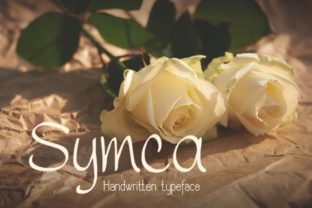
When you open Symca for the first time, the immediate impression is one of intentional imperfection. The letters carry subtle variations in stroke weight, slight wobbles in curves, and a natural rhythm that feels more like a marker meeting paper than a vector generated by code. That is because it was drawn by hand on a digital tablet. The designer did not digitize a sketch after the fact; they drew directly into the digital environment, preserving the tactile quality of real hand lettering while gaining the clarity and consistency expected of a premium font.
Symca occupies a space somewhere between a script font and a handwritten font, but it does not lean into flourishes or decorative loops. The letterforms are relatively straightforward, which gives them versatility. The x-height is generous, making it readable even at smaller sizes, and the spacing is open enough that words breathe on the page. There is a slight forward lean to many of the characters, lending a sense of motion and energy.
Personality-wise, Symca is approachable without being cutesy. It carries confidence without arrogance. It feels personal—like something a friend wrote on a chalkboard at a coffee shop or the hand-lettered logo of a boutique brand you instantly trust. That balance is harder to achieve than it sounds. Many handwritten fonts veer either too chaotic or too sterile. Symca lands in that sweet spot where it feels both crafted and spontaneous.
The Visual Characteristics That Define Symca
- Hand-drawn authenticity: Every character shows evidence of human touch—subtle pressure changes, slight irregularities, and natural line variation.
- Moderate contrast: Stroke weights vary enough to create rhythm but not so much that readability suffers.
- Open counters and generous spacing: Letters like e, a, and o remain clear and legible, even in short bursts of text.
- Consistent baseline: Despite the hand-drawn feel, the font sits neatly on a baseline, making it suitable for structured layouts.
- Neutral emotional tone: Symca is friendly but professional, warm but not overly casual.
These attributes make Symca a genuine creative font that bridges the gap between personal expression and commercial viability.
Where Symca Works Best in Real Projects
The real value of any display font is not in how it looks on a specimen sheet. It is in how it performs across actual design contexts. Symca has a surprisingly wide range of applications, and understanding those will help you deploy it with intention.
Invitations, Cards, and Personal Projects
Because Symca carries a human warmth, it is a natural choice for wedding invitations, save-the-dates, greeting cards, and thank-you notes. The hand-drawn quality pairs beautifully with textured paper stocks or digital backgrounds that mimic watercolor, linen, or craft paper. For a casual dinner party invite or a handmade-style birthday card, Symca delivers that personal touch without requiring you to hire a calligrapher.
One recommendation: use Symca for the headline or the guest names on an invitation, then pair it with a clean sans serif font for the details like date, time, and location. This creates visual hierarchy while keeping the overall piece approachable.
Branding, Logos, and Visual Identity
Small business owners and entrepreneurs often struggle to find a font that feels both distinctive and professional. Symca fits that brief well. For a logo, it works as a standalone wordmark, especially for businesses in the creative, lifestyle, food, wellness, or boutique retail spaces. Imagine a bakery name set in Symca, or a hand-lettered logo for a local florist or pottery studio. The font conveys that the brand is run by real people who care about craft.
For broader brand identity work, Symca can anchor the primary logo while a complementary serif font or sans serif font handles body copy. This gives you consistency across packaging, signage, and digital assets without making everything feel like it was written in the same hand.
Titling, Headlines, and Editorial Design
In editorial design, a strong headline font sets the tone for the entire piece. Symca works well for magazine headers, blog post titles, chapter openers, and pull quotes. Because it is a display font by nature, it commands attention without needing to be oversized. Use it sparingly—one or two lines per page—and let it breathe with generous whitespace around it.
For bloggers and publishers, Symca can become part of your visual signature. Use it for your blog name, section headings, and featured quote callouts. Readers will start to associate that hand-drawn warmth with your voice and perspective.
Posters, Flyers, and Signage
Posters and flyers live or die on their ability to grab attention quickly. Symca is readable from a distance thanks to its open letterforms and consistent baseline. For a music event poster, a workshop flyer, or a signage piece for a local market, try using Symca for the primary headline and a simple sans serif font for supporting information. The contrast between hand-drawn and neutral creates a clean, modern look.
Social Media Graphics and Web Design
In the crowded world of social media graphics, differentiation is everything. Symca helps your Instagram quotes, announcement cards, and story templates feel less templated and more original. It works especially well on platforms where authenticity drives engagement. On websites, use Symca for hero section headlines or call-to-action banners. It adds a layer of personality that a standard system font simply cannot match.
T-Shirt and Merchandise Design
Apparel design is another strong use case. A t-shirt with a single word or short phrase set in Symca reads as artisanal and intentional. The hand-drawn quality translates well to screen printing, and the moderate stroke weight ensures the design remains legible on fabric.
How Symca Influences Readability, Hierarchy, and Brand Perception
Typefaces do not just carry words. They carry emotion, signal intent, and shape how audiences perceive a brand or message. Symca influences these factors in specific ways that matter for designers, marketers, and business owners.
Readability and Visual Hierarchy
Because Symca was drawn by hand, it naturally draws the eye. In a layout dominated by neutral body text, a Symca headline acts as an anchor. Readers can quickly identify where the important information lives. The font works best at medium to large sizes—typically 18 points and above for print, and at least 24 pixels for digital. Below those sizes, some of the hand-drawn detail begins to compress, so reserve Symca for elements that need emphasis.
For web design and digital publishing, Symca can also improve scannability. When users land on a page, they often glance at headings first. A distinctive handwritten font like Symca slows the scan rate just enough to encourage deeper reading.
Brand Perception and Professionalism
There is a common misconception that hand-drawn fonts look unprofessional. Symca challenges that. Because the execution is controlled—consistent baseline, intentional spacing, and moderate styling—it communicates care rather than carelessness. For a brand, this translates to perceived authenticity. Customers see a logo or headline in Symca and think, This business pays attention to detail.
In the context of modern typography, audiences are increasingly skeptical of overly polished corporate visuals. A font like Symca signals that you are approachable, creative, and human-centered. For marketers, this can be a strategic advantage, especially in lifestyle, wellness, food, and creative service sectors.
Consistency Across Applications
One practical challenge with many handwritten fonts is inconsistency across different contexts. A font that looks great on a poster might fall apart on a business card. Symca holds up well because the letterforms are relatively stable. The same weight and attitude carry across print, digital, and merchandise. This makes it a reliable choice for designers who need one typeface to function across multiple touchpoints.
Audience Engagement
When an audience sees something that looks handcrafted, they pause. That pause is engagement. In email marketing, a Symca headline can lift open-to-read rates. In social media, it can stop a scroll. In packaging, it can influence a purchase decision. The font works because it feels personal, and personal sells.
Practical Guidance for Choosing and Using Symca
Selecting a font for a project is not about picking the prettiest option. It is about fit. Here is how to evaluate whether Symca belongs in your creative toolkit, along with practical tips for using it well.
Evaluating Project Fit
Ask yourself three questions before committing to Symca for any project:
- Does this project need a human touch? If the answer is yes—because the brand is personal, the message is emotional, or the audience values authenticity—Symca is a strong candidate.
- Will the font be used primarily at display sizes? Symca is a display font and performs best at medium to large sizes. If your project requires extensive body text at small sizes, consider pairing Symca with a neutral body font.
- Does the context support hand-drawn aesthetics? For formal legal documents or highly technical industries, Symca may feel out of place. For creative services, hospitality, retail, lifestyle, publishing, and personal projects, it fits naturally.
Testing Font Pairings
Symca plays well with others, and thoughtful font pairing elevates any project. Here are pairings worth testing:
- With a clean sans serif: Symca + Montserrat, Open Sans, or Lato creates contrast between hand-drawn and neutral. Use Symca for headlines and the sans serif for body copy.
- With a refined serif: Symca + Playfair Display or Merriweather works for editorial projects where you want warmth in the heading and authority in the body.
- With another handwritten font: This is possible only if one is clearly dominant. Use Symca as the primary voice and a simpler handwritten font for secondary text, but keep this pairing minimal to avoid visual noise.
Reviewing Included Styles and Readability
Before committing to Symca for a commercial project, review the available styles. Understand the character set—does it include the ligatures, punctuation, and numerals your project needs? Check for language support if your audience reads in multiple languages. Readability testing is also worth doing: set Symca in your intended layout, print it at actual size, and read it from the distance your audience will use.
Commercial Licensing Considerations
For commercial font use, licensing matters. Whether Symca is part of a font bundle or sold individually, confirm that your license covers the specific use cases in your project. Web use, app embedding, merchandise, and broadcast often require different licensing tiers. If you are a small business owner or freelancer, check the standard desktop license first, then upgrade if your distribution needs are broader.
For brand identity work where the font becomes part of a logo, make sure the license covers logo use. Many premium fonts allow this under a standard license, but it is always safer to verify before delivery.
Why Symca Deserves a Place in Your Design Workflow
The best design assets are the ones that make your work feel more like you and less like a template. Symca does that. It is not trying to be every font for every project. Instead, it offers something specific: a hand-drawn quality that feels genuine, flexible enough to work across branding, publishing, packaging, social media, and personal projects, and structured enough to function in professional contexts.
Whether you are an entrepreneur building a visual identity from scratch, a designer looking for a headline font with character, a marketer crafting a campaign that needs warmth, or a hobbyist making invitations for a loved one, Symca gives you a starting point that already feels human. The hand that drew it is gone, but the result remains—a typeface that looks and feels like someone cared enough to draw every letter by hand.