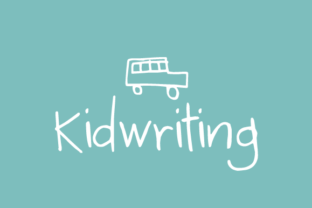
Kidwriting Family: A Playful Font for Real Creativity
You’re designing a poster for a children’s book reading event. You want it to feel warm, inviting, and a little bit messy—in the best way. The kind of mess that says “this is for kids, not for a corporate boardroom.” That’s where the Kidwriting family steps in. It’s a font that looks like it was scribbled by a young hand, but with enough polish to work in professional projects. Whether you’re a small business owner, a teacher, or someone who just loves making things, this font family gives you that handcrafted feel without the shaky line work.
What Makes Kidwriting Family Different?
Most handwritten fonts try too hard to be neat. They’re smooth, uniform, and lose the personality that real handwriting has. Kidwriting family leans into the quirks: uneven strokes, slight wobbles, and letters that don’t quite line up. That imperfection is exactly what makes it useful. When you use it, your project immediately feels more personal. It’s like someone actually wrote it out, rather than typed it.
The family includes several weights and styles, so you can switch between bold headlines and lighter body text without losing the overall vibe. That’s important because one of the biggest complaints about handwritten fonts is that they’re hard to read in long paragraphs. Kidwriting manages to stay legible even when you scale it down, which opens up more use cases than you might expect.
Headlines and Titles That Grab Attention
Think about the last time you scrolled through social media and stopped at a post because the text looked like a child’s drawing. That’s the power of a font like this. Bloggers and content creators use Kidwriting family for YouTube thumbnails, Instagram stories, and blog headers. It stands out because it doesn’t look like the same dozens of sans-serif fonts everyone else uses.
If you run a small business and you’re promoting a family-friendly event, a headline set in Kidwriting feels more approachable than something stiff. A local bakery could use it for a “Kids Bake Free” promotion and instantly communicate that the event is for real kids, not just families in logo form.
Book Covers That Feel Like Stories
Self-published authors and independent publishers love Kidwriting for children’s books, but it works for other genres too. A memoir about childhood, a guide to parenting, or even a poetry collection can benefit from a title that feels handwritten. It sets the tone before the reader opens the cover. If you’re writing a book about creativity or education, using a font that looks like it came from a kid’s notebook reinforces your message without you having to say a word.
I’ve seen it used on chapter title pages, too. Paired with a readable serif or sans-serif for the body text, Kidwriting adds a little personality without overwhelming the page.
Posters and Flyers for Real Events
School events, community fundraisers, church picnics, and library programs all need flyers that feel local. A polished corporate font can make a bake sale look like a shareholder meeting. Kidwriting family keeps the design light and friendly. You can use it for the event name, the date, and even short details like “bring a dish to share.” It works especially well when you’re printing on colored paper or adding illustrations.
One thing to watch: if your flyer has a lot of text, use Kidwriting only for the key headlines. Write the small print in something more neutral. That way you keep the charm without sacrificing readability.
Invitations That Feel Handmade
Birthday parties, baby showers, and even wedding invitations for casual or outdoor ceremonies can use Kidwriting family. It gives the invitation a handmade look without having to actually write out fifty envelopes. You can pair it with a simple border or a watercolor background for an even more personal feel. If you’re a freelance designer or a hobbyist who makes invitations for friends, this font saves time while still looking custom.
Educators and Homeschooling Parents
Teachers make a lot of materials: worksheets, bulletin boards, classroom labels, and reading logs. Kidwriting family works well for titles on worksheets, especially for younger kids who respond to playful design. A math worksheet with a “Fun Number Challenge” header in Kidwriting feels less intimidating than one typed in Times New Roman. Homeschooling parents can use it to create their own spelling lists, flashcards, or reward charts. It adds a personal touch that kids notice, even if they don’t say it.
Just keep in mind that for very long instructions or reading passages, you’ll want to switch to a clearer font. Kidwriting is best for short bits of text that need to pop.
Small Business Owners and Entrepreneurs
If your brand targets families, kids, or creative fields, Kidwriting family helps you avoid looking like every other business. A children’s clothing boutique could use it on tags, signage, and website banners. A toy store could use it for promotional emails. Even a dentist who specializes in pediatric care could use it on reminder cards or coloring sheets in the waiting room. The font says “we get it, this is for real people.”
The key is to use it consistently but sparingly. Using it for every single piece of text makes your brand feel chaotic. Pick one or two places—headlines, logo text, or call-to-action buttons—and let the font do the heavy lifting.
Bloggers and Content Creators
Bloggers who write about parenting, education, crafting, or lifestyle often struggle to find a font that matches their voice. Kidwriting family helps you look like a creative person without trying too hard. Use it in your blog’s header image, in social media graphics, and even in your email newsletter’s subject line preview. It works especially well with photos of handmade projects or kids’ artwork. The font bridges the gap between the digital layout and the real-world content.
For video thumbnails, the bold weight of Kidwriting stands out even on small screens. If you’re a YouTuber making content for parents or teachers, this font can become part of your visual brand.
Legibility First
No matter how much you love the look, if people can’t read it, it’s not working. Kidwriting family is more readable than many handwritten fonts, but it’s still best for short blocks of text. Test it at different sizes before you commit. If you’re printing it small—like on a business card or a tag—zoom in and see if the letters blur together. If they do, use it only for the name or biggest piece of text.
Pairing With Other Fonts
Kidwriting shines when you let it do its own thing and use a simple, clean font for everything else. A classic sans-serif like Open Sans or a neutral serif like Merriweather works well. Avoid pairing it with another handwritten font—it gets noisy. Think of Kidwriting as the star player on the team. The other fonts are there to support it.
Licensing and Format
Before you download or buy, check the license. Some font families restrict commercial use or limit how many projects you can use them in. Kidwriting family is available in several formats and usually comes with a standard license that covers personal and commercial projects, but always double-check. You don’t want to build a brand around a font only to find out you can’t use it on your product packaging.
Digital vs. Print Output
Kidwriting family looks slightly different on screen than it does in print. On high-resolution screens, the slight imperfections add character. In print, those same wobbles can look like a scanning error if the font size is too small. If you’re printing flyers or posters, print a test copy at actual size. Adjust the weight or size until it reads naturally.
Real Outcomes You Can Expect
When you use Kidwriting family, people respond differently. They slow down. They notice the text because it doesn’t look like every other ad or announcement. For a small business, that extra half-second of attention can be the difference between someone walking past your flyer and someone picking it up. For a teacher, a playful font can make a worksheet feel like a game. For a parent making a birthday invitation, it can turn a digital template into something that feels handmade.
The font family won’t do the work for you—you still need good design and clear messaging—but it gives you a head start. It helps you look like someone who cares about the little details. And in a world full of generic templates, those details matter.
Whether you’re designing a book cover, a classroom display, a social media post, or a product label, Kidwriting family gives you a way to add warmth and playfulness without losing professionalism. It’s a tool, not a magic trick. Use it where it fits, and skip it where it doesn’t. That’s how you get the most out of any font.