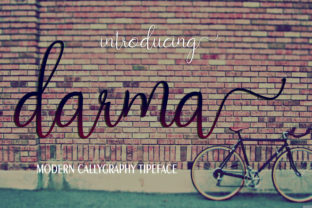
Evaluating Darma as a Handwritten Font for Your Projects
Selecting the right typeface can shape how an audience perceives your content. Among the many handwritten fonts available, Darma stands out for its distinctive character. This article provides a balanced evaluation of Darma, exploring its strengths, limitations, and the contexts where it either excels or falls short. The goal is to help you decide whether Darma aligns with your specific project needs.
What Is Darma?
Darma is a handwritten font designed to emulate natural, cursive lettering. Its stroke patterns, letter connections, and baseline variations mimic the irregularities of writing by hand, giving it a personal and unpolished feel. Unlike many script fonts that aim for perfect consistency, Darma embraces slight unevenness in letter spacing and weight, which contributes to its authentic, human quality.
The font typically includes uppercase and lowercase characters, numerals, and basic punctuation. Some versions may offer stylistic alternates or ligatures that enhance the handwritten effect. Darma is available in common font formats such as OTF and TTF, making it compatible with most design software, including Adobe Creative Suite, Sketch, and web platforms that support custom typefaces.
Why Consider Darma?
Handwritten fonts serve a distinct purpose in design: they convey personality, warmth, and approachability. Darma addresses several specific needs for designers and content creators.
- Authenticity: The irregular stroke widths and subtle slant create a sense of immediacy, as if someone wrote the text specifically for the viewer.
- Readability at moderate sizes: Compared to highly stylized script fonts, Darma maintains legibility in body text sizes between 14px and 24px, provided the line spacing is generous.
- Versatility in tone: Darma can appear casual yet deliberate, making it suitable for both informal communications and projects that require a gentle, inviting tone.
- Complementary pairing potential: Its organic nature pairs well with clean sans-serif or neutral serif fonts, allowing designers to create contrast without visual conflict.
These attributes make Darma appealing for branding, social media graphics, invitations, and editorial accents where a human touch is desired.
Benefits of Using Darma
When Darma fits the project, it offers several practical advantages.
- Distinct personality: Many handwritten fonts lean heavily into formal calligraphy or extreme playfulness. Darma strikes a middle ground, offering a friendly but legible style that doesn't distract from the message.
- Good performance on digital platforms: Because Darma has moderate stroke contrast and no excessive flourishes, it renders well on screens without pixelation or readability loss at common display sizes.
- Licensing clarity: Most standard licenses for Darma cover commercial use, which is important for branding, product packaging, and marketing materials. Always verify the specific end-user license agreement, but the font is generally straightforward for professional work.
- Time savings: Using a well-designed handwritten font like Darma eliminates the need to commission custom hand-lettering, which can be costly and time-consuming.
Tradeoffs and Limitations
No font works universally, and Darma has constraints that may affect your decision.
- Limited extended character support: Some versions of Darma may lack full coverage for Central European, Cyrillic, or non-Latin scripts. If your project requires multilingual support, verify the character set before committing.
- Not suitable for long-form body text: While Darma is readable at moderate sizes, extended paragraphs of handwritten style cause visual fatigue. Readers may struggle to maintain focus across multiple sentences. Use Darma for headlines, pull quotes, or short highlights rather than full articles.
- Varying weight distribution: The handwritten quality means some letters appear heavier or lighter than others. This can create an unbalanced look in justified text blocks or when letters repeat closely together.
- Potential for informal perception: Darma’s casual character may undermine authority in formal documents, legal contexts, or corporate communications. If the goal is to project professionalism or technical competence, a more neutral typeface is preferable.
Considerations When Using Darma
To get the best results from Darma, keep the following practical points in mind.
- Test at target sizes: Always preview Darma at the exact dimensions it will appear in the final product. What looks clear on a 24px screen may become muddy at 12px or lose its charm at 72px.
- Mind the spacing: Handwritten fonts often require increased letter-spacing and line-height to maintain readability. Adjust kerning manually for critical titles or logos.
- Combine with restraint: Use Darma as an accent rather than the dominant typeface. Pair it with a neutral sans-serif or a clean serif for body text. Avoid pairing it with other script or handwritten fonts, as the combination can appear cluttered.
- Check background contrast: Darma’s stroke weight variations can cause legibility issues on busy backgrounds or low-contrast settings. Ensure sufficient contrast, especially on digital displays.
- Consider the medium: Darma works well for print materials like greeting cards, posters, and packaging. On digital platforms, test how it renders on different browsers and devices, as font rendering engines vary.
When Darma Is a Strong Fit
Certain project types naturally benefit from Darma’s characteristics.
- Personal branding and small business identities: Freelancers, artists, boutique shops, and lifestyle brands can use Darma to convey approachability and craftsmanship. It works well for logos, business cards, and website headers.
- Event invitations and announcements: Wedding invitations, party flyers, and save-the-date cards often call for a personal, handwritten feel. Darma offers that without the formality of copperplate scripts.
- Social media content: Instagram captions, Pinterest pins, and Facebook cover text benefit from Darma’s friendly tone. It pairs well with photography and illustration.
- Editorial accents: Magazine layouts, blog headers, and pull quotes can use Darma to add visual interest without overwhelming the page structure.
- Packaging for artisanal products: Food, beauty, or craft products that emphasize handmade qualities align with Darma’s aesthetic. It reinforces an artisanal or organic brand message.
When Alternatives May Be Worth Considering
Darma is not the right choice for every project. In the following situations, exploring other fonts may serve you better.
- Formal or corporate communications: Annual reports, legal documents, investor decks, and official correspondence require a neutral, authoritative typeface. A clean serif or professional sans-serif is more appropriate.
- Multilingual or global projects: If your content includes non-Latin scripts or extensive special characters, look for handwritten fonts with broader language support. Many alternative script fonts offer expanded character sets.
- High-density text layouts: In books, white papers, or lengthy articles, a handwritten font causes fatigue and reduces reading speed. Choose a text-optimized serif or sans-serif typeface for body copy.
- Minimalist or ultra-modern design: For projects that aim for clean, geometric, or tech-forward aesthetics, Darma’s organic irregularity may clash. A monoline script or geometric sans-serif would align better.
- Very small text sizes: Below 12px, Darma’s variable strokes can become indistinct. For footnotes, captions, or small labels, choose a font designed for small-scale legibility.
Practical Decision-Making Insights
Choosing a font involves balancing aesthetic preferences with functional requirements. Here are guiding questions to help determine whether Darma suits your project.
- What tone do you want to communicate? If warmth, friendliness, and approachability are central, Darma supports those qualities. If authority, precision, or formality is required, look elsewhere.
- How much text will use this font? For short accents, Darma is effective. For paragraphs or pages, its limitations become apparent. Plan to use Darma sparingly.
- What is the primary medium? Test Darma on your actual delivery channel. Print and digital each pose different rendering challenges. A font that looks great in a PDF may not perform equally on a mobile screen.
- Do you need to match an existing brand? If your brand already uses a specific tone or type system, evaluate whether Darma complements or conflicts with existing assets. Consistency matters more than novelty.
- What is your audience’s expectation? Consider who will consume the content. A handwritten font may resonate with a creative or lifestyle audience but could appear unprofessional to a corporate or academic audience.
How to Test Darma in Your Workflow
Before fully committing to Darma, run a practical evaluation within your actual design environment.
- Download a trial version or use a preview tool to test Darma in your layout.
- Create a sample page with headlines, subheadings, and a short paragraph set in Darma. Assess readability at different sizes and on different backgrounds.
- Pair Darma with two or three complementary fonts. Observe whether the combination feels balanced or disjointed.
- Show the sample to a colleague or stakeholder who is unfamiliar with the design. Ask for their first impression without explaining your intent. Their reaction often reveals how the font communicates on its own.
- Run the text through a readability checker or simply read it aloud. If you find yourself slowing down or re-reading phrases, the font may be impairing comprehension.
Final Considerations
Darma is a capable handwritten font that serves a specific niche well. Its strength lies in conveying authenticity and warmth, making it a solid choice for personal branding, event materials, and creative editorial accents. However, it is not designed for extended reading, formal contexts, or small-scale applications. The key to using Darma effectively is restraint: let it carry the emotional weight of a headline or accent, and let more neutral typefaces handle the functional load of body text.
By evaluating your project’s tone, audience, and medium against Darma’s characteristics, you can make an informed decision that supports both aesthetic goals and practical readability. Where Darma fits, it can add genuine personality. Where it does not, the alternative fonts you choose will ensure your message remains clear and appropriate.