BigFoot: A Playful Dingbats Font by Rodrigo Araya
When evaluating decorative typefaces for design projects, the distinction between a gimmick and a genuinely useful tool often comes down to intent, execution, and context. BigFoot, a dingbats font created by designer Rodrigo Araya, sits at this intersection. It is not a conventional text font for paragraphs or headlines, but rather a pictorial typeface built around a single, recurring motif: the sasquatch, or bigfoot. This article offers a balanced evaluation of BigFoot, examining what it is, why it might appeal to designers, where it performs well, and where alternative approaches may better serve your project goals.
What Is BigFoot?
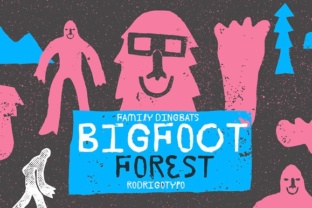
BigFoot is a dingbats font, meaning each character in the font file corresponds to an image rather than a letter, number, or punctuation mark. In this case, every glyph depicts a variation of the bigfoot creature in different poses, expressions, and activities. The font was designed by Rodrigo Araya, a type designer known for work that often blends whimsy with clear, vector-based illustration. Unlike many dingbat fonts that offer a broad collection of unrelated icons, BigFoot is tightly thematic. Every character is a variation on the same subject, giving the font a cohesive identity that can be used to create patterns, sequences, or standalone illustrations.
The font is typically available in standard OpenType or TrueType formats, making it compatible with most design software, including Adobe Creative Suite, Affinity products, and even word processors. This accessibility lowers the barrier to entry for designers who want to experiment with a playful, narrative-driven visual element without commissioning custom illustrations.
Why Might Someone Be Interested in BigFoot?
Interest in BigFoot usually stems from a need for visual personality that standard icon sets or clip art do not provide. The font offers a pre-made, consistent visual language built around a recognizable folkloric figure. For designers working on projects that involve nature, camping, the outdoors, humor, children's content, or regional themes tied to Pacific Northwest culture, BigFoot can feel like a natural fit. The creature itself carries cultural associations that range from mystery and adventure to lighthearted parody, and the font capitalizes on that range.
Another reason for interest is workflow efficiency. Instead of sourcing individual illustrations, checking licensing, or adjusting styles to match each other, a designer can install one font and type out a sequence of images. This can be useful for repeat patterns, borders, or even simple stop-motion-style sequences where the bigfoot character changes pose from one glyph to the next.
Additionally, some designers are drawn to BigFoot simply because it is different. In a market saturated with clean, minimalist, corporate-friendly icon fonts, a dingbat font with a single, quirky subject stands out. It can add a human (or cryptid) touch to a project that risks feeling too sterile.
Benefits, Tradeoffs, and Practical Considerations
Like any specialized design tool, BigFoot comes with clear benefits and equally clear tradeoffs. Understanding these helps you decide whether it aligns with your specific project needs.
Benefits
- Thematic consistency: Every glyph shares the same visual style, line weight, and subject. This makes it easy to create cohesive layouts without worrying about mismatched aesthetics.
- Ease of use: As a font, it requires no special skills beyond basic typing and character selection. Designers who know how to access glyph palettes can quickly insert the exact pose they need.
- Scalability: Because it is vector-based, BigFoot scales cleanly from small icons to large print graphics without loss of quality.
- Narrative potential: The variety of poses—running, standing, waving, hiding—allows for sequential storytelling or the creation of small scene compositions.
- Conversation starter: The novelty of a bigfoot-themed dingbat font can add an element of surprise or humor that resonates with certain audiences.
Tradeoffs and Considerations
- Narrow subject matter: The font is limited to one theme. If your project requires diversity in iconography, you would need to supplement BigFoot with other resources.
- Not a text face: BigFoot cannot be used for reading text. It is a display-only pictorial font. Using it as a substitute for body copy or headlines would render the content illegible.
- Potential overuse: Because every glyph is a bigfoot, using too many in one layout can feel repetitive rather than charming. Moderation and spacing are important.
- Audience reception: Not every audience will interpret the bigfoot motif the same way. For some, it may feel juvenile or too niche. Context matters heavily.
- License limitations: As with any commercial font, you should verify the license terms. Some font licenses restrict use in merchandise, app development, or large-scale distribution. Check before committing.
Expectations When Working with BigFoot
If you decide to use BigFoot, set realistic expectations. The font is not a comprehensive illustration library. You will not find a bigfoot riding a bicycle in every font weight, because it is a single-style, single-subject dingbat set. The glyphs are designed at a consistent size and weight, so you cannot easily mix a "bold" bigfoot with a "light" bigfoot. You are working within the constraints Araya set. Plan your layout accordingly, and consider layering or combining the font with other typefaces or graphic elements to create richer compositions.
When Is BigFoot a Strong Fit?
BigFoot performs best in projects where the theme directly aligns with the bigfoot concept. Some strong-fit scenarios include:
- Posters or flyers for outdoor events, especially those with a humorous or family-friendly tone (e.g., camping festivals, nature walks, children's summer camps).
- Decorative borders or fill patterns for newsletters, zines, or websites centered on cryptozoology, folklore, or regional Pacific Northwest culture.
- Merchandise designs for t-shirts, stickers, or mugs aimed at bigfoot enthusiasts or people who appreciate whimsical outdoor imagery.
- Educational materials for children where the bigfoot character can serve as a visual guide or mascot through different poses.
- Social media graphics or video thumbnails for content creators who focus on mystery, hiking, or comedy. A single bigfoot glyph can act as a recognizable brand icon.
In these contexts, BigFoot saves time and reinforces the theme. The audience is likely to understand and appreciate the reference, and the font's limitations become less noticeable because the subject matter is already narrow.
When Might Alternatives Be Worth Considering?
There are equally valid situations where BigFoot may not be the best choice, and a different approach could better serve your goals. Consider alternatives if:
- You need diverse iconography: For projects like a website's icon set, an app interface, or a presentation with multiple concepts, a general-purpose icon font (such as Font Awesome, Material Icons, or a custom set) will cover more ground with fewer gaps.
- The audience is professional or formal: In corporate, medical, legal, or academic contexts, a bigfoot motif may undermine credibility. Neutral icon sets or simple geometric shapes would be more appropriate.
- You require a specific pose or action: BigFoot includes a range of poses, but it cannot cover every possible action you might envision. If you need a bigfoot hiking with a specific gear or interacting with other characters, a custom illustration or vector purchase will give you that control.
- You want a different visual style: Araya's style in BigFoot has a particular line weight and level of detail. If your project calls for a more detailed, realistic, or minimalist treatment of the subject, the font's fixed style may clash.
- You need text legibility: For any project where the primary goal is reading—whether on a website, in a book, or on a sign—BigFoot should not be used as a text font. Stick with standard text faces and use dingbats only as accents.
In these cases, the cost of forcing a square peg into a round hole—whether in terms of audience confusion, stylistic mismatch, or limited functionality—outweighs the novelty benefit.
Practical Decision-Making Insights
When deciding whether BigFoot is right for your project, ask yourself three questions:
- Does the bigfoot theme directly support my content or brand? If the answer is yes, the font can be a fast, effective way to reinforce that theme. If the connection is forced, the result may feel arbitrary.
- Am I willing to work within the constraints of a single-subject dingbat set? BigFoot does not adapt to your needs; you adapt to its offerings. Projects that benefit from repetition and pattern-making will fare better than those requiring unique, varied illustrations.
- Does my audience have the context to appreciate the reference? BigFoot works best when the audience already has some familiarity with the bigfoot concept or is in a setting where whimsy is welcome. If you are unsure, test a sample design with a small group before committing.
From a practical standpoint, BigFoot is a niche tool. It is not a workhorse font for everyday use, nor should it be judged as one. Its value lies in its specificity. For designers who need a quick, consistent, and playful way to incorporate a bigfoot motif into their work, it offers a ready-made solution. For those who need broader iconographic coverage, stylistic flexibility, or a more formal tone, alternative resources will likely prove more effective in the long run.
Ultimately, evaluating BigFoot means evaluating whether the alignment between the font's narrow strengths and your project's specific needs is strong enough to justify the tradeoffs. When it fits, it fits well. When it does not, the mismatch is hard to ignore. By approaching the decision with clear criteria and realistic expectations, you can determine whether BigFoot deserves a place in your typographic toolkit or whether it is better left as a curiosity for someone else's project.