Boxise: A Blackletter Font That Redefines Legibility Without Sacrificing Character
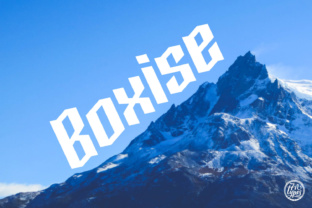
Blackletter typefaces carry centuries of history. Their dense, ornate strokes evoke manuscripts, Gothic cathedrals, and old-world authority. Yet for all their visual power, blackletter fonts have long suffered a practical drawback: legibility. Readers strain to parse complex letterforms, especially at smaller sizes or in longer passages. Enter Boxise, a distinctive blackletter style created by type designer Situjuh Nazara. This font manages something rare — it retains the dramatic, angular spirit of blackletter while surprising users with genuine readability. That balance opens doors far beyond traditional uses, making Boxise a versatile tool for designers across many industries.
What Makes Boxise Different From Traditional Blackletter Fonts
Most blackletter fonts prioritize ornamentation over clarity. Flourishes, overlapping strokes, and compressed spacing create atmosphere but often frustrate readers. Boxise takes a different path. Situjuh Nazara designed the characters with carefully considered proportions, open counters, and consistent stroke contrast. The result is a blackletter that breathes. Letters remain distinct even when set close together, and the eye moves across words without getting tangled in decorative excess.
The x-height is generous. Ascenders and descenders are balanced rather than exaggerated. These subtle engineering decisions mean Boxise works where other blackletter fonts fail — at small sizes, on screens, and in short blocks of copy. You can read it without squinting. That may sound like a modest achievement, but for anyone who has wrestled with traditional blackletter faces, it is transformative.
The Designer Behind the Typeface
Situjuh Nazara brings a thoughtful approach to type design. Boxise reflects an understanding that fonts must serve real communication needs, not just aesthetic impulses. Nazara’s work demonstrates respect for historical forms while adapting them for contemporary contexts. The designer has crafted a blackletter that does not compromise on visual personality but respects the reader’s experience. That dual focus — honoring tradition while prioritizing usability — defines Boxise and explains its growing appeal among designers who might otherwise avoid blackletter altogether.
Where Boxise Excels: From Headlines to Everyday Applications
Because Boxise balances visual impact with clarity, it suits a wider range of projects than typical blackletter fonts. Below are some of the most effective uses, along with practical observations for each.
Headings and Titles
Boxise commands attention in headlines. Its strong vertical strokes and sharp angles create immediate authority. Unlike many blackletter fonts, it remains readable at larger sizes without letters bleeding into each other. For editorial design, book covers, or webpage headers, Boxise delivers a bold statement without sacrificing comprehension. Pair it with a clean sans-serif body font for contrast — the combination feels both historic and modern.
Logos and Brand Identity
Brands seeking heritage, craftsmanship, or rebellious energy often gravitate toward blackletter. Boxise offers those associations in a more accessible package. The font’s legibility means logo text can be smaller without becoming unreadable, which matters for digital applications, favicons, and social media avatars. Nazara’s design also handles well when condensed or stretched — useful for custom wordmarks. Consider Boxise for breweries, barbershops, music labels, or any brand that wants gothic flair without alienating customers.
Posters and Signage
Posters demand fonts that grab attention from a distance. Boxise delivers strong readability at display sizes, while its blackletter personality adds a handcrafted feel. For event posters, concert announcements, or retail signage, the font reads clearly even when viewed from an angle or in low light. Its stroke weight holds up well against busy backgrounds — a common challenge with more delicate blackletter faces.
Apparel and Merchandise
Screen printing, embroidery, and heat transfer all impose constraints on type. Thin strokes can break, small details can blur. Boxise’s robust character shapes and open counters translate well into fabric. T-shirts, hoodies, and hats benefit from the font’s bold presence and legibility. It works for small chest prints as effectively as large back designs. For streetwear brands or music merchandise, Boxise provides an edge without sacrificing readability at a glance.
Cards, Invitations, and Stationery
Wedding invitations, business cards, and greeting cards often use blackletter to convey formality or tradition. Boxise brings a contemporary clarity to these applications. Recipients can actually read the details — names, dates, locations — without struggling. The font’s legibility reduces errors and frustration, especially on items where information matters. For formal events with a modern twist, Boxise strikes the right tone.
Menus and Signage in Hospitality
Restaurants, cafes, and bars often use blackletter for menus to suggest authenticity or old-world charm. But a menu must be scannable. Customers need to find dishes, prices, and descriptions quickly. Boxise serves this need well. Its legibility at menu-appropriate sizes means staff spend less time explaining items. Bar menus, chalkboards, and restaurant signage all benefit from a blackletter that customers can actually read in dim lighting or at a glance.
Practical Benefits of Choosing Boxise
Beyond aesthetic considerations, Boxise offers several concrete advantages for designers and businesses.
Versatility across media. Boxise performs equally well in print and digital environments. It renders cleanly on screens at various resolutions, unlike some blackletter fonts that rely on fine details lost in digital display. This makes it suitable for responsive web design, email headers, and digital advertising.
Time savings for designers. Because Boxise works for multiple applications — headlines, body text at larger sizes, logos, and merchandise — designers can maintain brand consistency without juggling multiple typefaces. One font family can anchor an entire identity while maintaining legibility across touchpoints.
Reduced reader friction. Any designer who has fielded complaints about unreadable blackletter knows the value of a font that communicates immediately. Boxise reduces the cognitive load on readers. They absorb the message without fighting the type. That matters for conversion-driven projects like landing pages, product packaging, or event tickets.
Historical resonance without historical baggage. Blackletter carries associations — some positive (tradition, quality) and some negative (inaccessibility, elitism). Boxise retains the positive associations while reducing the negative ones. Its legibility makes blackletter approachable for audiences unfamiliar with the style.
Considerations Before Using Boxise
While Boxise is remarkably legible for a blackletter, it remains a display typeface at heart. Designers should respect its strengths and limitations.
Body text at small sizes. For extended reading at 10pt or below, even Boxise may cause fatigue. It excels at sizes above 14pt and for short passages. Reserve it for headlines, subheads, pull quotes, and short copy blocks rather than paragraphs.
Language support. Check that Boxise covers the characters you need, especially for multilingual projects. Many blackletter fonts have limited character sets. Verify before committing to a large project.
Pairing with other fonts. Boxise pairs best with clean, neutral typefaces that do not compete for attention. Minimalist sans-serifs or understated serifs work well. Avoid pairing it with another highly decorative font, as the results can feel chaotic.
Licensing for commercial use. Understand the license terms for your specific use case — web embedding, app integration, merchandise, and print all may require different permissions. Confirm that Boxise’s license covers your planned applications.
Examples and Scenarios in Practice
Imagine a craft brewery launching a limited-edition IPA. The label needs to stand out on a crowded shelf. Boxise sets the beer name in bold blackletter, evoking tradition and craftsmanship. The ingredient list and ABV appear below in a clean sans-serif. Customers read the brand instantly, even from across the aisle. The bottle looks premium. The message is clear.
Consider a wedding invitation suite. The couple wants elegance with an edge. Boxise renders their names at the top of the invitation. The ceremony details — date, time, venue — appear in a lighter weight of the same family or a complementary font. Guests find the information immediately, without squinting or misreading. The design feels unique, but practical.
Picture a music festival poster. Headliners appear in large Boxise letters, while supporting acts and logistical info sit in a readable sans-serif below. The poster reads at a distance, draws attention on social media feeds, and works as a thumbnail. The blackletter adds grit and energy. The legibility ensures no one misses the lineup.
Final Observations on a Font That Bridges Two Worlds
Boxise succeeds because it does not force designers to choose between personality and function. Situjuh Nazara created a blackletter that respects its historical roots while adapting to modern communication needs. Whether you are building a brand, designing an event, or crafting merchandise, this font lets you use blackletter without apology — and without confusing your audience.
Its surprising legibility is the key. That single quality expands the typeface’s utility across industries and mediums. In a design landscape where first impressions happen in seconds, a blackletter you can actually read is a rare and valuable tool. Boxise deserves consideration from anyone who wants their work to feel bold, authentic, and accessible all at once.