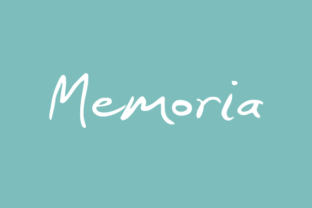
Memoria Family: A Distinctive Typeface for Creative Expression
The moment you start exploring the Memoria Family, you notice something uncommon. It does not scream for attention, yet it invites a closer look. This typeface balances structure with a subtle spark of personality—a quality that makes it equally at home on a book cover, a poster, an invitation, or a headline. Designers who appreciate versatility without sacrificing character often find themselves returning to this family. Whether you are crafting a brand identity, laying out a magazine spread, or designing a wedding suite, the Memoria Family offers a palette that feels both refined and approachable.
Understanding the Unique Visual Voice of Memoria
At its core, the Memoria Family is built on clean lines and thoughtful proportions. The letterforms carry a gentle contrast between thick and thin strokes, giving the typeface a sense of rhythm without becoming overly decorative. This makes it highly readable even at smaller sizes, while still possessing enough elegance to command larger display settings. The x-height is generous, which aids legibility in body text, and the terminals often feature soft, rounded details that add warmth.
What sets Memoria apart from many other families is its ability to shift mood depending on context. In all-caps headlines, it projects authority and refinement. In lowercase body copy, it becomes inviting and human. This duality is not accidental. The designers behind Memoria Family carefully tuned the spacing, kerning, and curve radius to allow the font to perform across a wide range of uses. For someone building a visual system, this means fewer compromises when moving from a hero header to a supporting paragraph.
Another notable characteristic is the treatment of punctuation and numerals. The ampersand, for example, has a flowing, almost calligraphic gesture that adds a touch of personality without disrupting the overall consistency. Numbers remain clear and balanced, making Memoria a reliable choice for annual reports, data-heavy layouts, or pricing menus where clarity is paramount.
Where Memoria Shines: Real-World Applications
The Memoria Family adapts to environments that demand both beauty and function. One of its strongest applications is in book cover design. The typography needs to capture the essence of a story at a glance, and Memoria does so with understated confidence. A literary novel might use the lighter weights for an airy, elegant feel, while a thriller could benefit from the bolder cuts to create tension and impact. The family includes enough weight variation—from light to bold—to support these shifts without needing supplementary fonts.
Posters and event graphics also benefit from Memoria’s clarity. Because the letterforms remain distinct even when scaled up, you can set large headlines without losing legibility. Paired with ample tracking, the typeface takes on a modern, premium aesthetic that works well for cultural events, conferences, or gallery openings. For invitations, particularly for weddings or milestone celebrations, Memoria brings a sense of ceremony. The ligatures and alternates (where available) allow for personalized touches that make each piece feel crafted rather than templated.
Beyond print, the Memoria Family has found a place in digital branding. Its legibility on screens, combined with its distinctive look, makes it suitable for hero sections, navigation labels, and even short paragraphs on product pages. Many designers pair it with a simple sans-serif for body text, letting Memoria take the lead where it matters most—titles, quotes, and call-to-action buttons. The result is a hierarchy that feels deliberate and cohesive.
Practical Benefits for Designers and Creatives
Working with the Memoria Family means spending less time adjusting and more time creating. The font family comes meticulously spaced, so letters rarely collide or create awkward gaps. This is especially valuable when setting tight headlines or small text on packaging, where every pixel counts. Kerning pairs like "AV," "To," and "Wa" are already balanced, so you can focus on layout and color rather than micromanaging typography.
Another practical advantage is the family’s support for extended character sets. If your project requires accented characters, ligatures, or even multiple scripts, Memoria often includes the necessary glyphs. This makes it a reliable choice for multilingual branding or international publications. No one wants to discover midway through a project that a key character is missing. The Memoria Family reduces that risk.
For those who work across different media, consistency is a challenge. Memoria helps solve this by retaining its core character in both print and digital environments. The same font that looks crisp on a coated paper stock also renders smoothly on a retina display. This consistency saves time and ensures that your brand or project voice remains unified, whether someone sees it on a billboard or a mobile phone.
How Memoria Family Complements Modern Design Workflows
Modern designers juggle multiple tools—Adobe Creative Suite, Figma, Sketch, web platforms—and a font family needs to integrate seamlessly. Memoria Family is typically available in OpenType format with multiple weights and styles, which works across all major design applications. You can load the entire family into your font manager and access light, regular, medium, semibold, and bold (along with italic counterparts) without switching files. This speeds up experimentation when you are trying to find the right weight for a specific context.
For web designers, the Memoria Family can be implemented via webfont services or self-hosting. The file sizes are optimized, especially if the family includes subset versions for Latin or specific character ranges. Performance remains a priority, so using Memoria for headings while pairing it with a system font or a lightweight sans-serif for body text keeps load times reasonable. The family also supports variable font technology in some versions, allowing designers to adjust weight on the fly for responsive typography—a huge advantage when designing for screens of all sizes.
Key Considerations Before Adopting Memoria
No typeface is perfect for every situation, and the Memoria Family has its own strengths and limitations. One factor to consider is its suitability for very small text. While the generous x-height helps, the moderate stroke contrast means that at extremely small sizes (below 10px on a screen, or 6pt in print), the thin strokes may become less visible. For footnotes, captions, or legal fine print, you might want to test a sample before committing.
Licensing is another practical consideration. Memoria Family is often a commercial typeface, and its license terms vary depending on where you purchase it. Make sure you understand whether the license covers web use, app embedding, or multiple users. Some licenses are per-project, others per-user, and a few offer unlimited usage. Clever designers calculate the total cost based on their needs—especially if the family will be used across a large team or for many projects.
Recommendations for Type Pairings
To get the most out of the Memoria Family, pair it with a neutral sans-serif that does not compete for attention. Good partners include simple geometric sans or humanist sans—something with a consistent stroke weight and straightforward shapes. Avoid pairing Memoria with another highly expressive serif if you want to prioritize readability. If you are working on a project that demands a more decorative approach, Memoria can stand alone for headlines while a clean sans handles body text. For vintage or editorial projects, consider pairing it with a slab serif for contrast.
Final Observations on the Memoria Family
The Memoria Family earns its place in a designer’s toolkit by delivering on the promises that matter most: versatility, readability, and distinctive character. It does not force a particular mood; rather, it adapts to the intentions you bring to the design. Whether you are designing a wedding invitation that whispers romance or a conference poster that demands attention, Memoria provides a solid foundation. Its thoughtful construction saves time during layout and ensures that your typography remains a strength, not a stumbling block. For anyone who values creative freedom without sacrificing quality, the Memoria Family is well worth adding to your library—and using again and again.